
Inside BENEO’s new pulse plant: pioneering sustainable protein from faba beans
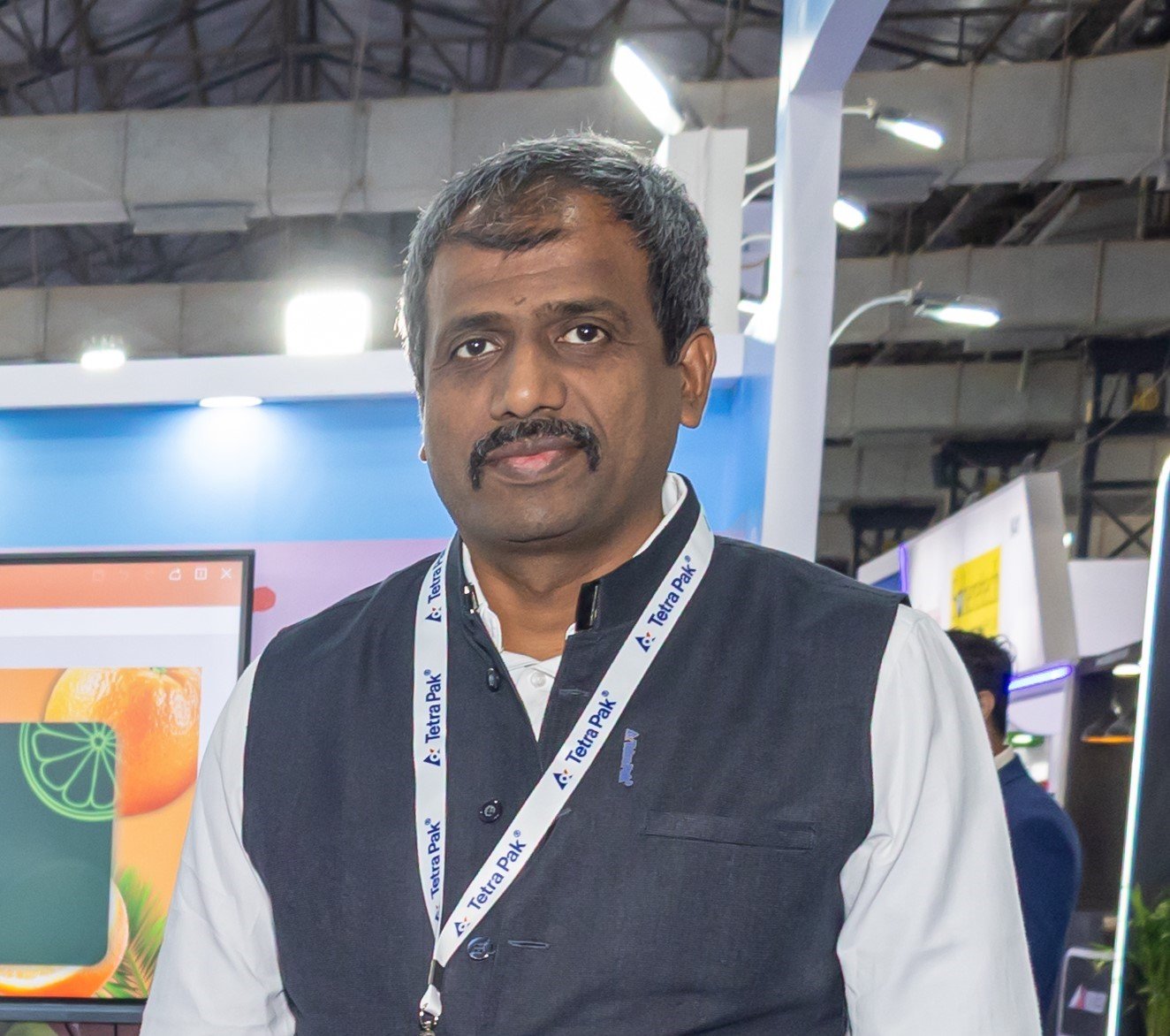
As India’s food and beverage industry steps into an era of rapid expansion, rising cost pressures, and intensified sustainability mandates, the demand for smart, connected, and future-ready factories has never been greater. With the recent launch of Factory OS, Tetra Pak, world leading food processing and packaging solutions company, has taken a decisive step toward transforming digital operations in food manufacturing. In this exclusive interaction with Sachin Salunkhe, Automation and Digital Business Development Manager, Tetra Pak India, we explore how Factory OS is designed to integrate legacy and modern equipment, enhance Overall Equipment Effectiveness (OEE), improve energy and resource efficiency, and empower India’s F&B producers through unified, data-driven manufacturing. Edited excerpts:
Could you briefly describe how Tetra Pak Factory OS is structured as a service/solution for Indian food & beverage (F&B) manufacturers — specifically, what modules are offered in India (processing, packaging, analytics, etc.)?
Across the global food and beverage sector, including India, manufacturers are under immense pressure to do more with less: improve productivity, ensure consistent quality, manage sustainability targets, and remain cost-competitive in an increasingly complex environment. Yet, most factories today operate on fragmented systems that limit visibility and agility. Tetra Pak Factory OS was designed precisely to solve this. It is a unified, end-to-end automation and digital platform purpose built for the food and beverage industry. It brings together a modular, scalable ecosystem of hardware and software that connects equipment, systems, and data across the factory floor. Built on decades of food industry and equipment expertise, Factory OS brings together modules for production, asset health, energy management, quality assurance, knowledge management, and material management, all powered by a single scalable data integration platform that collects and contextualises data across the factory from any equipment. This architecture allows manufacturers to move beyond isolated automation projects to a truly integrated, AI-ready operation, empowering food and beverage producers to deliver consistent product quality, enhance efficiency, reduce utility usage, and lower total cost of ownership.
Developed in collaboration with Accenture, the portfolio is supported by a robust ecosystem including Siemens, Rockwell Automation and Inductive Automation – but it’s Tetra Pak’s deep food production expertise that ensures these technologies deliver real impact for food producers.
In the Indian context—where many factories might still have legacy equipment—how does Factory OS handle integration with older lines, multiple equipment suppliers, and mixed technology environments?
Digital transformation cannot begin with a blank slate- especially in India, where legacy assets represent decades of investment. Our technology standardises data collection across all equipment, regardless of age or supplier, making it ideal for producers to modernise existing factories or build new ones. This flexibility is critical in the region, where producers are balancing growth, infrastructure constraints, and regulatory compliance.
Most factories generate massive amounts of data, but in silos that don’t talk to each other. This limits visibility, efficiency, and the ability to make fast, confident decisions. This technology directly addresses this challenge. It unifies every layer of production, from processing to packaging, into a single, digital ecosystem that delivers contextualised, real-time insights.
What are the key Indian market drivers (cost pressures, quality control, regulatory compliance, sustainability) that you see pushing F&B companies in India to adopt smart factory platforms such as Factory OS?
Three strategic forces are converging in India: rapid market growth and product diversification, mounting cost and margin pressure, and far stronger expectations on sustainability and traceability.
Add to that stricter compliance and the need for agility in product innovation, and the imperative becomes clear: operations must shift from reactive firefighting to predictive, outcome-driven manufacturing.
This technology answers that shift by converting operational complexity into clarity: real-time, contextualised insights that improve yield, reduce waste and optimise utilities — enabling manufacturers to protect margins while meeting quality, compliance and ESG commitments.
Given India’s infrastructure and workforce realities (skilled labour availability, digital maturity, power/utility variability), what adaptations or support services does Tetra Pak India provide to ensure successful Factory OS implementation and ROI?
Future readiness doesn’t come from technology alone – it comes from strategy. The key is to build digital transformation around outcomes, not individual tools. That means starting with a clear understanding of the customer’s operational goals and industry realities -whether it’s improving energy efficiency, reducing waste, or maximising uptime – and then developing flexible, data-driven systems that can evolve as those needs change. If you have the right architecture, the right data foundation, and the right partners, your transformation can move at the same pace as innovation itself.
When it comes to the F&B industry, producers need a partner who understands the nuances of food and beverage production. Partners should bridge the gap between operational realities and digital possibilities. This means using domain expertise to tailor solutions to specific categories and production models. They should also bring integrated capabilities across automation, digitalisation and lifecycle services, with a long-term mindset focused on co-creating value, not just deploying tools.
That’s where Tetra Pak comes in as the partner for the next chapter of digitalisation. We work closely with producers to share expert knowledge tailored to each production setup, connect automation and digital tools with ongoing support, and help teams manage the change confidently. We also ensure that investments stay relevant and future-ready, while turning data into meaningful actions that improve performance.
Sustainability is a major concern in Indian F&B manufacturing (water, energy, waste). How does Factory OS explicitly support sustainability KPIs in the Indian context — e.g., utility monitoring, emissions tracking, waste reduction?
Just as Tetra PakFactory OS helps producers manage costs, it supports their sustainability responsibilities. It connects data across equipment and systems to identify inefficiencies, reduce waste, and optimise energy use. Inline analytics oversee the use of energy, water and raw ingredients in manufacturing operations. This gives producers the visibility they need to refine their operational strategies and make more efficient use of valuable resources, while eliminating waste.
Considering the Indian food & beverage industry’s growth in segments such as dairy, plant based, functional foods and fortified products, how is Factory OS adapted to help manufacturers of those segments (versus standard beverage or dairy lines)?
This new technology has been designed as a modular, open and scalable platform that supports food and beverage producers across categories, from traditional dairy to emerging segments such as plant-based and fortified products.
This gives manufacturers in dairy, plant-based, functional, and fortified segments a significant edge over standard, non-automated lines by fully integrating process control and data management across the factory. For dairy, this means automated control of critical parameters like fat standardisation, pasteurisation, and more, ensuring consistent quality and reducing manual errors. For fortified and functional products, this technology enables precise recipe management and dosing of micronutrients, while maintaining end-to-end traceability for compliance and food safety. Its modular architecture supports hybrid production environments, allowing quick adaptation for new SKUs or product variants without major reconfiguration. Real-time monitoring and predictive maintenance optimise energy, water, and cleaning cycles, lowering operating costs. By turning disconnected processes into a connected, data-driven system, it helps manufacturers improve efficiency, ensure quality, and scale innovation across all high-growth segments.
Comparative studies show that highly automated factories can achieve up to 20% higher OEE, 45% lower product waste, and 20% fewer packaging line stops compared to less automated facilities.
What are the major barriers you observe in India to scaling digital/automation solutions like Factory OS — e.g., capital constraints, digital skills, integration complexity — and how is Tetra Pak helping customers and the ecosystem overcome these?
Across the Indian food and beverage industry, producers are navigating a familiar set of challenges: rising input costs, sustainability pressures, and a widening skills gap in digital operations. Many factories still operate a mix of legacy and modern equipment, making system integration and standardisation complex. At the same time, capital constraints often make large-scale digital transformation seem daunting.
By embedding automation and digitalisation together, Factory OS helps manufacturers increase agility while reducing variability, improving quality, cutting waste, and lowering energy and water use. In parallel, our training and operator-support tools make digital systems intuitive and accessible, enabling teams to develop the digital competencies they need to succeed in a more connected, automated environment.
In short, we help customers manage costs, meet sustainability goals, and overcome labour shortages, through a stepwise digitalisation journey that delivers measurable impact from day one.
Digital transformation requires new skill sets at the operator and plant manager levels. Does Tetra Pak provide standardized training programs or certifications in India to enable a smooth shift to digital operations?
Technology is transforming the factory floor in a way that empowers people. AI and automation are taking on repetitive, manual tasks and turning data into actionable insights, enabling operators to focus on higher-value work such as optimisation, quality improvement, and innovation.
Unified, intuitive dashboards and automated process control allow operators to see, understand, and respond to what’s happening in real time, often from a single interface. This reduces training time and supports more consistent decision-making across shifts and sites. As a result, we expect to see more digitally skilled, multi-disciplinary teams emerging—people who combine production knowledge with data awareness.
Factory OS is designed to simplify complexity. With intuitive dashboards and real-time insights, it empowers operators to make informed decisions without needing deep technical expertise. It also automates routine tasks, allowing teams to focus on higher-value work.
To enable this shift, we support our customers with standardised training and upskilling programs in India, helping them build a workforce that’s ready for the future. These programs are tailored to ensure operators and plant managers can confidently navigate digital tools and processes, accelerating the journey toward smart, connected factories.
Looking ahead to 2026 and beyond: How do you see India’s F&B manufacturing landscape evolving in terms of smart factories and digitalisation? What role do you foresee for Tetra Pak Factory OS in helping Indian producers capture growth, improve resilience and competitive advantage over the next 12-24 months?
Over the next 12–24 months, India’s food and beverage industry will strengthen its resolve to move from digital experimentation to digital industrialisation, as the value of data-driven operations becomes undeniable. We expect to see a decisive shift from isolated pilots to enterprise-wide transformation, particularly among mid-sized producers seeking scale, efficiency, and resilience.
Factory OS is positioned to be the foundation of that shift—a food and beverage– specific, scalable, and secure platform that transforms operational data into measurable business advantage. Our ambition is to act not merely as a technology provider, but as a long-term transformation partner, combining advanced digital tools with deep industry expertise and local delivery capabilities.
The food and beverage industry will continue to face pressure to produce more with less, meet sustainability targets, and adapt to shifting consumer expectations. It will be the producers that connect systems, empower people, and turn data into actionable insights who will solve these challenges and shape the sustainable, intelligent factories of the future. Together, these capabilities will empower Indian manufacturers to capture growth, strengthen competitiveness, and lead the next chapter of sustainable industrial progress.
Mansi Jamsudkar Padvekar