
Inside BENEO’s new pulse plant: pioneering sustainable protein from faba beans
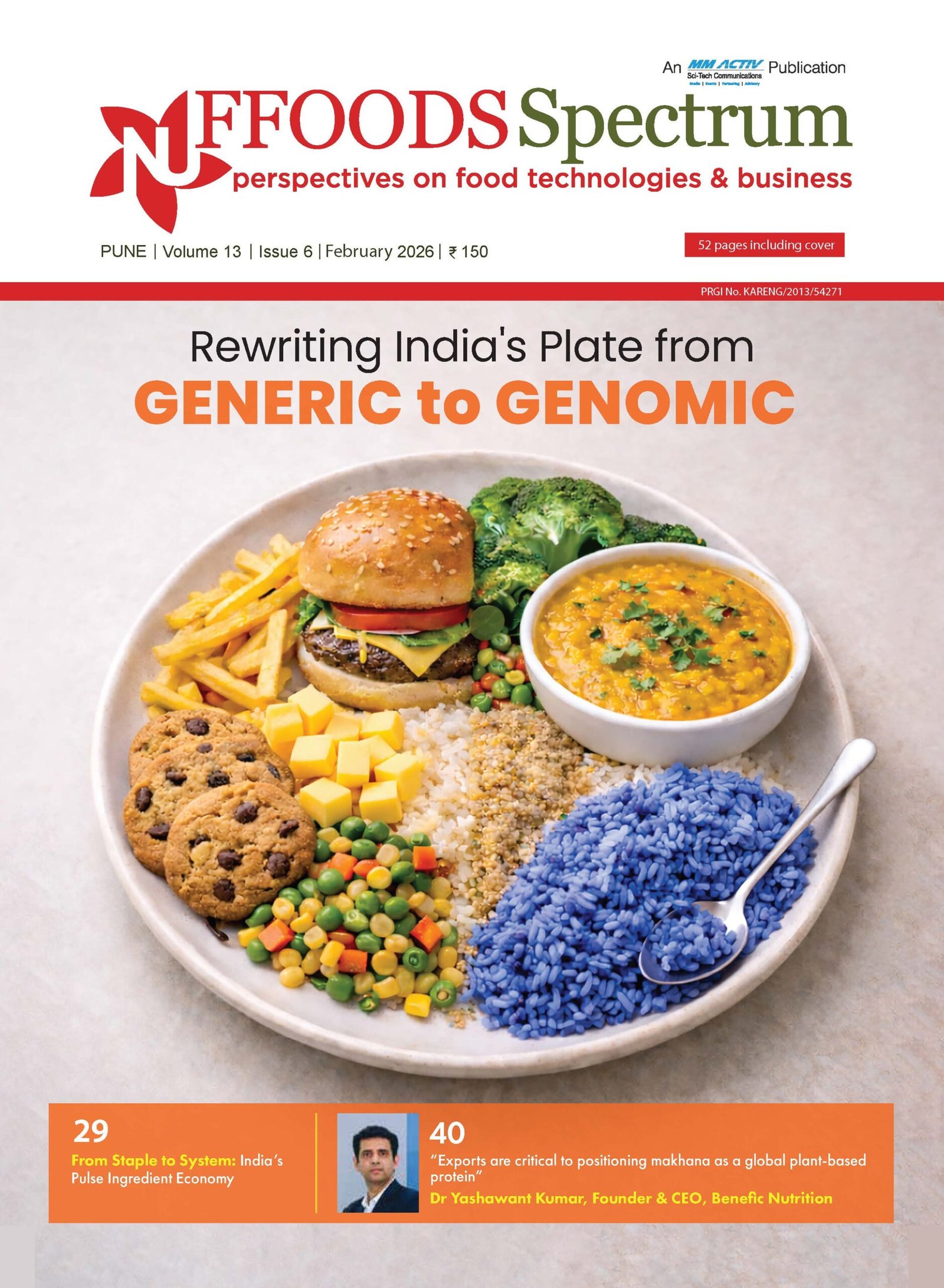
India’s nutrition problem is no longer about hunger alone—it is about mismatch. Even as supermarket shelves overflow with “healthy” products and fortified foods, diabetes, obesity, and micronutrient deficiencies continue to rise side by side. The contradiction is forcing a rethink. Consumers are questioning generic wellness claims, scientists are challenging population-average diets, and startups are betting that biology—not branding—will shape the future of food. From DNA tests and gut biomarkers to tech-enabled meal plans, nutrition in India is shifting from mass solutions to individual relevance. The question is no longer whether this shift will happen, but whether India can scale precision nutrition responsibly and affordably.
In late 2025, mainstream consumer packaged goods giants began recalibrating how they think about daily nutrition, signalling a shift from broad wellness claims toward more targeted, meaningful nutrition solutions. Hindustan Unilever (HUL), for example, sharpened its focus on lifestyle nutrition by expanding its Horlicks Superfoods range with blends featuring oats, almonds, and millets specifically designed for everyday health needs, tapping into rising consumer demand for functional nutrition at scale. At the same time, startups like The Kenko Life raised fresh funding from ecosystem players such as Rainmatter by Zerodha to build scalable subscription-based models that combine macro-balanced meals with science-informed recommendations, offering high-protein, low-added sugar options alongside tech-led personalisation layers.
These developments highlight a broader evolution in India’s market: nutrition is no longer just about calories or generic health claims; it’s about relevance, context, and increasingly, individual needs.
For decades, India’s nutrition strategy, both at a public health and commercial level, has followed a one-size-fits-all approach. Dietary guidelines, fortified foods, supplements, and even functional products have largely been designed for the “average Indian.” However, the idea of an average Indian has always been flawed. India is home to vast genetic diversity, multiple dietary patterns, regional food habits, and varying metabolic responses to the same foods. This mismatch has increasingly become visible as India simultaneously battles undernutrition, micronutrient deficiencies, obesity, diabetes, and cardiovascular diseases.
Traditional nutrition frameworks focused on calorie sufficiency and basic nutrient intake. While this approach helped reduce hunger, it did little to address why two individuals eating the same diet experience completely different health outcomes. One person thrives, while another develops deficiencies or lifestyle disorders. This gap has pushed scientists and nutritionists to look beyond food quantity and quality, toward how the body actually responds to nutrients. DNA-driven diets are emerging as a response to this challenge. Nutrigenomics: the study of how genes interact with nutrients, suggests that genetic variations influence how individuals absorb, metabolise, and utilise food. For instance, lactose intolerance, gluten sensitivity, caffeine metabolism, and vitamin absorption all have genetic links. Understanding these variations opens the door to designing diets that align with individual biology rather than population averages.
In India, this shift is particularly relevant. A carbohydrate-heavy diet, combined with genetic predisposition, has contributed to rising diabetes rates. Similarly, iron deficiency persists despite widespread fortification because absorption varies across individuals. DNA-based insights offer the possibility of addressing these gaps with more targeted nutrition strategies. This transition from generic nutrition to DNA-driven diets also reflects a broader change in consumer mindset. Health is no longer just about eating “healthy food”; it is about eating the right food for one’s body. As preventive healthcare gains momentum, food is increasingly viewed as a tool to manage long-term health risks.
The move away from one-size-fits-all nutrition is not a rejection of traditional diets, but a refinement of them. DNA-driven nutrition aims to personalise food choices within existing cultural frameworks, making nutrition more effective, sustainable, and relevant for India’s diverse population.
Precision vs Personalised Nutrition: Where India Really Stands
In India’s evolving nutrition landscape, the boundary between personalisation and precision is often blurred, yet the difference between the two has significant implications for scientific credibility, product design, and health outcomes. Most products currently marketed as personalised nutrition are, in reality, segmented nutrition, formulated based on age, gender, lifestyle, or health conditions such as diabetes, gut health, or heart health. While this approach is a clear step forward from mass-market multivitamins, it still does not account for individual biological differences in nutrient absorption, metabolism, or genetic predisposition.
Experts working at the intersection of nutrition science and advanced diagnostics emphasise that this distinction is not merely semantic, but foundational to how nutrition solutions are designed and delivered. As Arun Om Lal, industry chair professor, NIFTEM Kundli notes: “Personalised nutrition and precision nutrition are often used interchangeably, but they have distinct meanings. Personalised nutrition focuses on tailoring dietary recommendations to an individual’s unique characteristics, such as genetic profile, lifestyle, and health goals. Precision nutrition, on the other hand, involves using advanced technologies like genomics, metabolomics, and artificial intelligence to provide highly specific and targeted nutritional advice.
The key differences lie in their approach and scope. Personalised nutrition adapts general dietary guidelines to individual needs, whereas precision nutrition seeks to understand the complex interactions between genes, environment, and lifestyle to create truly individualised nutrition plans. Precision nutrition is a game-changer, especially in India where dietary habits and health challenges are highly diverse. It enables nutrition plans to be tailored to genetic makeup, lifestyle, and health goals, making it particularly effective for managing conditions such as diabetes and cardiovascular disease.
For instance, an Indian Council of Medical Research (ICMR) study found that high consumption of refined carbohydrates such as white rice increases the risk of type 2 diabetes and prediabetes. A precision nutrition approach accounts for individual genetic and metabolic differences, allowing dietary recommendations to move beyond blanket restrictions and become culturally and biologically relevant.
This distinction matters because segmentation now dominates the Indian market at scale. According to industry estimates, India’s personalised nutrition and supplements market was valued at over $600 million in 2025 and is projected to grow at a CAGR of more than 16 per cent through the next decade, driven largely by condition-specific supplements, protein formats, and functional foods rather than true biological personalisation. The popularity of diabetes-friendly nutrition, gut-health formulations, and targeted immunity products reflects this shift.
Precision nutrition goes a step further by using biological data: DNA, gut microbiome profiles, blood biomarkers, and metabolic markers, to design nutrition interventions. It seeks to answer not just what someone should eat, but why a particular nutrient or formulation works for that individual. In India, this approach is still emerging, largely through startups offering DNA testing kits, microbiome analysis, or biomarker-based nutrition plans, often bundled with digital coaching.
In recent years, companies such as NuGenomics, MapmyGenome, Xcode Life, Vieroots, and KYEAL have brought genomic and biomarker-led nutrition conversations into the mainstream wellness space. At the same time, platforms like HealthifyMe and Ultrahuman are adding deeper data layers: continuous glucose monitoring, metabolic insights, and AI-driven recommendations, signalling how technology is beginning to bridge the gap between lifestyle tracking and biological insight. However, India’s nutrition market is currently in a hybrid phase. On one end are traditional supplements and functional foods with broad or condition-based claims. On the other are precision-focused startups catering primarily to urban, affluent consumers. True precision nutrition remains limited by cost, awareness, availability of testing infrastructure, and limited integration with mainstream food and nutraceutical products.
Data relevance presents another structural challenge. Much of the global nutrigenomics and microbiome research that informs precision nutrition today is based on Western populations. Applying these insights directly to Indian consumers, who exhibit vast genetic, dietary, and metabolic diversity, can lead to incomplete or inaccurate outcomes. Building India-specific genomic and biomarker datasets remains a critical gap. “There have been remarkable advances in recent years in identifying genetic variants that alter disease susceptibility by interacting with dietary factors. Despite the remarkable progress, several factors need to be considered before the translation of nutrigenetics insights to personalised and precision nutrition in ethnically diverse populations. Some of these factors include variations in genetic predispositions, cultural and lifestyle factors as well as socio-economic factors. Conducting gene-diet interaction studies in diverse populations is essential given the genetic diversity and variations in dietary patterns. Studies utilising large sample sizes are required as this improves the power to detect interactions with minimal effect sizes”, says Vimal Karani S, Deputy Director, Institute of Food, Nutrition and Health, University of Reading, UK.
While adding more depth to the topic, Madhuree Kumari, Scientist, Indian Institute of Science (IISc), Bangalore comments, “Currently, treatment of various human ailments is based on different therapeutic approaches, including traditional and modern medicine systems. The continuously and gradually evolving disciplines of genomics in relation to nutrition have elucidated the importance of genetic variations, epigenetic information, and expression of myriads of genes in disease progression, apart from their involvement in modulating therapeutic responses. Although precision nutrition now includes the integrative study of latest omics of nutrigenomics like metagenomics, metabolomics, and next-generation sequencing to understand the relationship between nutrition profile and human health management. However, the management of huge amounts of data generated by omics approaches is still a challenging task and warrants the application of the latest artificial intelligence and machine learning tools for in depth understanding.”
Despite these constraints, momentum is unmistakable. Consumer interest is shifting from short-term wellness fixes toward deeper questions around nutrient absorption, metabolic health, gut function, and long-term disease prevention. Brands are responding by experimenting with customised packs, subscription models, biomarker-led recommendations, and digital health integrations, even if full-scale precision remains aspirational for now.
The key question, therefore, is not whether India will adopt precision nutrition, but how quickly and how responsibly it will move from segmentation to true biological precision. Achieving this transition will require close collaboration between food and nutraceutical companies, diagnostics firms, researchers, digital health platforms, and regulators, ensuring that science, affordability, and consumer trust evolve together.
DNA Testing Goes Mainstream: Hype or Healthcare Shift?
DNA testing in India has steadily expanded beyond ancestry and forensic applications into wellness, nutrition, and preventive health. Over the past few years, a growing ecosystem of Indian companies has introduced at-home genetic testing kits that provide insights related to nutrient metabolism, fitness response, disease predisposition, and long-term health planning. This shift reflects a broader movement toward data-driven and preventive healthcare models.
Globally, nutrigenomics has gained scientific recognition over the last two decades. Peer-reviewed research published in journals such as The American Journal of Clinical Nutrition, Nature Genetics, and Nutrients has established clear links between specific genetic variants and nutrient metabolism. Well-studied examples include genetic polymorphisms affecting folate metabolism (MTHFR), lipid metabolism (APOE), caffeine metabolism (CYP1A2), vitamin D synthesis (VDR), and lactose tolerance (LCT). These insights form the scientific foundation on which DNA-based nutrition recommendations are built.
Industry practitioners, however, point out that while scientific validation exists, adoption is still at an early stage. Dr Sajeev Nair, Founder & Chairman, Vieroots explains, “While genetic testing for nutritional needs is growing fast, we are nowhere near ideal adoption rates. But this will change irreversibly, going forward. The current adopters are individuals who prefer to take charge of their health rather than leave it to fate or in their doctor’s hands alone. They are the leader birds who lead the rest of the flock to better futures, and at Vieroots we are seeing their word-of-mouth publicity regarding its benefits gaining traction in winning new adopters.”
The benefits from DNA-based diets are hard to ignore. “Your genes affect the metabolism of the foods you eat, and the foods you eat affect your gene expression in return. This bidirectional link is termed nutrigenomics, and is so powerful that even individuals who have failed to lose weight by every other way, lose weight and keep it away too after adopting DNA-based weight loss programmes. ‘Optimize My Weight’ from us has been India’s first such programme,” says Dr Nair.
Dr Nair further adds, “Beyond weight management, DNA-based diets also offer potential in preventing lifestyle diseases. A recent study by our research team found that almost all individuals with a risk of heart disease also had a genetic risk for magnesium deficiency. Genetic testing can help identify such risks across hundreds of diseases and nutrients, enabling preventive supplementation years before disease onset. However, DNA-based nutrition cannot be oversimplified. Comprehensive nutrigenomic testing must be correlated with metabolic assessments, and translated by multidisciplinary teams including doctors, geneticists, nutritionists, and lifestyle experts. Nutrient deficiencies rarely exist in isolation, and absorption depends on complex nutrient interactions. We address these complexities through proprietary AI-based systems refined across tens of thousands of clients.”
Simplified DNA diet advice commonly seen on social media does not hold much value. Nutrition also does not work in isolation—exercise, sleep, gut microbiome, and stress management play equally critical roles, all of which are genetically mediated. This systems biology approach is essential for truly personalised genomic wellness.
DNA testing has also played a role in increasing consumer literacy around biological individuality. Concepts such as genetic predisposition, metabolic variability, and preventive nutrition are increasingly shaping how Indian consumers approach long-term health. This awareness is influencing not only supplement choices, but also broader lifestyle decisions related to diet quality, physical activity, and disease prevention. Importantly, DNA testing is now being positioned as a foundational data layer, rather than a standalone solution. When integrated with clinical biomarkers, dietary assessments, and lifestyle data, genomic insights enable more structured and proactive nutrition strategies. This integrated approach aligns with India’s broader healthcare shift toward early intervention and preventive care, especially in the context of rising lifestyle disorders.
DNA testing is expected to play a growing role in shaping next-generation nutrition models in India. Its long-term impact will be defined by how effectively genomic insights are embedded within food systems, nutraceutical development, and preventive healthcare frameworks, moving nutrition closer to a science-led, individual-centric future.
Can India Support Precision Nutrition?
Precision nutrition cannot exist without strong scientific foundations. While India has a well-established food science, biotechnology, and diagnostics ecosystem, significant gaps remain in nutrigenomics research, clinical validation, and data integration. One of the most pressing challenges is the absence of large-scale, India-specific genomic and microbiome datasets that truly reflect the country’s genetic diversity, dietary patterns, and lifestyle variations. Building locally relevant datasets will require long-term investment, sustained research funding, and interdisciplinary collaboration between academic institutions, diagnostics firms, food and nutraceutical companies, and public health agencies, supported by strong public–private partnerships.
Another critical constraint is the high R&D intensity associated with precision nutrition. Advanced diagnostics, bioinformatics platforms, and continuous validation significantly increase development costs. For startups and mid-sized companies, balancing scientific depth with commercial viability remains a challenge, particularly in a price-sensitive market like India. At the same time, the industry is recognising that evidence-based innovation is no longer optional. Research institutions, food technology centres, and companies across the nutrition value chain are beginning to align around the need for scientifically validated, data-driven approaches that move beyond generic supplementation.
As nutraceuticals increasingly intersect with precision and personalised nutrition, the quality of inputs and evidence supporting formulations is becoming a defining factor for credibility. Gaurav Soni, Founder and Managing Director, Botanic Healthcare, explains, “As nutraceuticals move from generic formulations to targeted and personalised solutions, the credibility of the category increasingly depends on what sits beneath the label. Ingredient standardisation, clinical validation, and traceability are becoming decisive factors in whether personalised nutrition is viewed as science-led or marketing-led.
Standardisation is fundamental to efficacy. Studies have shown that the active compound content in non-standardised botanical ingredients can vary by 20 to 60 per cent depending on source and processing methods. For personalised nutrition, where formulations are designed around specific physiological needs, such variability can significantly dilute outcomes. Without consistent and measurable actives, tailoring nutrition to individual requirements becomes imprecise and unreliable.
Clinical validation adds a necessary layer of trust. Industry data shows that products supported by human clinical evidence are up to three times more likely to gain repeat consumer adoption compared to claim-led formulations. Bioavailability studies and controlled human trials establish not only whether an ingredient works, but how effectively it delivers benefits in real-world conditions, an important consideration as personalised nutrition increasingly intersects with preventive healthcare.
Traceability has also moved from being a compliance requirement to a quality differentiator. With the global nutraceutical market projected to cross $600 billion by 2030, regulators and consumers are demanding greater transparency across supply chains. Full traceability from raw material sourcing to finished ingredient helps ensure safety, consistency, and regulatory readiness, particularly as formulations become more targeted and data-driven.
Together, standardisation, validation, and traceability form the backbone of credible personalised nutrition. They enable brands to move beyond broad wellness claims and design solutions grounded in measurable science. This shift is essential if personalised nutrition is to be positioned as a serious, outcomes-focused category rather than a passing consumer trend.
Accessibility is the next defining issue. Currently, DNA-driven and precision nutrition services are largely concentrated among urban, affluent, and digitally literate consumers. High testing costs, limited awareness, and gaps in digital literacy restrict adoption across broader populations. For precision nutrition to deliver meaningful public health impact, it must evolve beyond premium wellness offerings. Scalable models, simplified testing frameworks, and integration with mainstream nutrition products and preventive health initiatives will be key to expanding reach. Affordability will depend on reducing diagnostic costs, leveraging digital platforms, and developing mass-customisation strategies that allow personalisation without full individualisation.
This challenge of accessibility and relevance is central to how emerging players are rethinking precision nutrition models in India. As Max Kushnir, Chief Scientific Officer, Sova Health, notes, “As someone building at the intersection of health, data, and nutrition, I’ve seen firsthand why India’s nutrition crisis isn’t about lack of information, it’s about lack of relevance. We’ve spent decades giving people generic advice, while biology quietly reminds us that no two bodies respond to food the same way. Precision nutrition changes that equation. Advances in genomics and microbiome science show that our gut bacteria, metabolic markers, and genetic predispositions directly influence how we digest food, absorb nutrients, and develop chronic conditions. Globally, this has shifted nutrition from calorie counting to biological response-based decision-making.”
Kushnir further adds, “In India, precision nutrition today is largely limited to urban, premium consumers. Full-scale microbiome or DNA testing is powerful, but expensive. Today, personalisation is a luxury, not a public health lever. From my experience, the solution isn’t to ‘dumb down’ the science but to design smarter entry points. Tiered personalisation, hybrid models combining validated questionnaires with select biomarkers, and cost-effective diagnostics can lower the barrier to entry while remaining evidence-based. This thinking drives our work at Sova Health.”
“We started with deep microbiome science but realised that impact comes from accessibility. We introduced India’s most affordable gut biome test and the country’s first fully personalised, questionnaire-based probiotics—products that are two to three times more cost-effective than existing alternatives. The future of nutrition in India will not be built only on premium DNA kits. It will be built on biomarker-led thinking, cost-conscious design, culturally relevant recommendations, and scalable nutraceutical innovation. When personalisation becomes practical and affordable, nutrition shifts from reactive care to preventive healthcare at scale.”
As the ecosystem evolves, regulatory and ethical considerations become increasingly important. Genetic data is deeply personal and sensitive, raising issues related to privacy, informed consent, data protection, and responsible usage. India currently lacks comprehensive, nutrigenomics-specific regulatory frameworks to govern DNA-based nutrition claims and data handling practices. Clear guidelines will be essential to define permissible claims, establish validation standards, and build consumer trust. This will require coordinated engagement between regulators, industry players, researchers, and healthcare professionals.
Finally, the scientific complexity of precision nutrition itself must be acknowledged. Genetic data indicates risk rather than outcomes, and nutrition responses are shaped by an interaction between genetics, gut microbiota, physical activity, socio-economic conditions, and long-term dietary habits. Translating genomic insights into meaningful health outcomes requires trained professionals, including dietitians and genetic counselors, as well as clinical validation to ensure recommendations are contextual, practical, and evidence-based.
India’s ability to support precision nutrition will therefore depend on how effectively science, affordability, regulation, and trust are aligned. The transition from segmented nutrition to true biological precision will be gradual, but with sustained investment, collaboration, and responsible innovation, India has the potential to build a precision nutrition ecosystem that is both credible and inclusive.
What’s Next: The Future Plate of India
The future of Indian nutrition lies at the convergence of food science, genomics, digital health, and consumer trust. While DNA may not dictate every food choice, it will increasingly influence how nutrition products are designed, validated, and positioned. Mainstream nutraceutical brands, ingredient companies, startups, and academic institutions will all play a role in shaping this transition, from segmentation today to true precision tomorrow. The success of precision nutrition in India will ultimately be measured not by how advanced the science becomes, but by how responsibly, inclusively, and effectively it improves everyday health outcomes.
Mansi Jamsudkar Padvekar