
Inside BENEO’s new pulse plant: pioneering sustainable protein from faba beans
Co-written by Sharmistha Naik, Sujoy Saha, & Kaushik Banerjee, ICAR-National Research Centre for Grapes,
Pune, Maharashtra
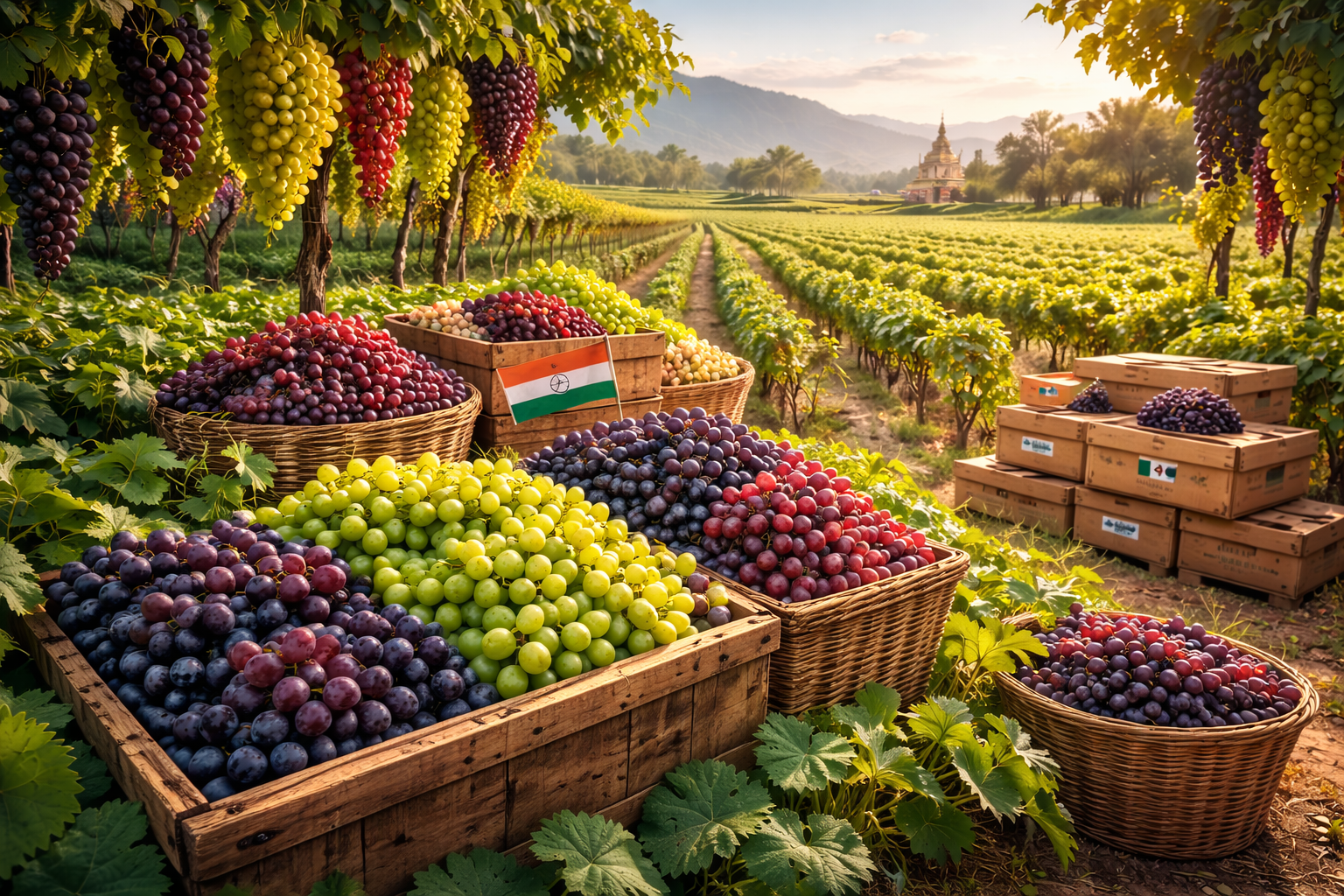
India’s grape industry remains a vibrant pillar of the country’s horticultural sector, distinguished by its strong focus on fresh consumption and exports. India’s grape production is mostly focused on table grapes, with 75–85 per cent of the harvest being consumed as a fresh fruit, in contrast to several major grape-producing countries where the majority of harvest feeds the wine industry. Raisins account for about 17–20 per cent of the total amount produced, wine production makes up only 1-2 per cent, and other products with value including vinegar, jams, jellies, and juices make up another small portion of 1-2 per cent.
Grapes offer significant nutritional value as a low-calorie fruit, comprising about 80 per cent water with negligible fat content and providing 53-94 kcal per 100 g. It delivers carbohydrates, dietary fibre, modest protein, key vitamins including C, K, B-complex, β-carotene, and E, and essential minerals, particularly potassium, along with calcium, phosphorus, and magnesium. The fruit’s health-promoting properties are amplified by abundant antioxidants, especially polyphenols such as resveratrol, anthocyanins, quercetin, and catechins concentrated in the skin and seeds. These compounds are associated with benefits including cardiovascular protection, reduced inflammation, improved metabolic function, neuroprotection, and immune support, with coloured grape varieties typically exhibiting higher antioxidant activity.
On the occasion of the 30th Foundation Day celebration of ICAR-NRCG on January 19, 2026, Dr. Aniket Joshi, a renowned physician, ICU specialist, and member of the Indian Medical Association (IMA), Pune Chapter, enlightened the participants about the impressive nutritional profile of grapes, and explained how intake of resveratrol, anthocyanins, catechins, and various other flavonoids through fresh grapes, juice, raisin, and wine helps neutralizing the free radicals in human body and combat oxidative physiological stress related diseases. Dr Joshi also explained how regular consumption of grapes is associated with improved endothelial function, reduced platelet aggregation, and modulation of blood lipid profile, providing immense cardiovascular benefits. While nullifying certain common myths, he also highlighted how regular consumption of grapes contributes to improved metabolic health by supporting glucose regulation and insulin sensitivity in healthy and diabetic individuals. The abundant presence of vitamins and minerals in grapes further supports immune function, bone health, and electrolyte balance in those individuals who include grapes as a part of their daily diet.
Grapes produced and marketed in India are generally safe when proper production and handling practices are followed. Experts clarify that the white film often seen on grape berries is a natural waxy layer called “bloom”, and not pesticide residue. Bloom is a self-defence that serves as a protective barrier against pests and diseases. For export grapes, India’s “GrapeNet” traceability system ensures rigorous monitoring of pesticide residues., Export rejections have plummeted from around 24 per cent in the early 2000s to under 1 per cent in recent years due to better adherence to Good Agricultural Practices (GAP) and rigorous food safety monitoring. An integrated farm-to-fork approach combining judicious pesticide use, observance of pre-harvest intervals, postharvest sanitation, cold-chain management and simple household practices such as a thorough washing of grape bunches in running water before consumption, keeps Indian grapes safer and more reliable.
Because of their sustainable production, field-level traceability, growing export, strict food safety compliance system, and proven nutritional and health advantages, grape and its processed products have enormous promise for the long-term well-being of the people of Vikasit Bharat.