
Inside BENEO’s new pulse plant: pioneering sustainable protein from faba beans
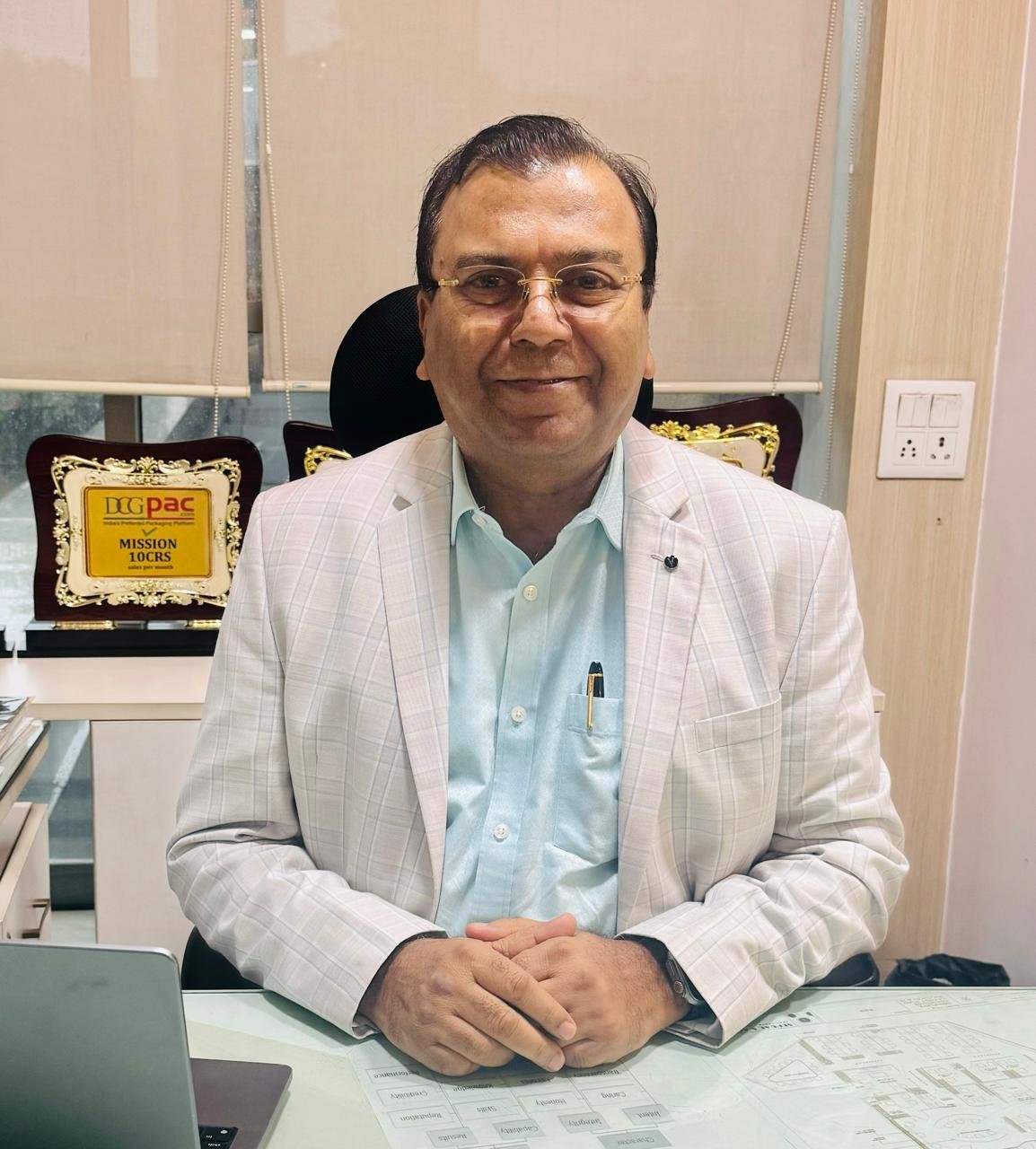
Suresh Bansal, Founder and CEO, DCGpac
In response to sustainability mandates, digital integration, and shifting trade agreements, global packaging and supply chain companies are restructuring their international strategies. DCGpac’s launch of DCGPAC UK Limited marks a strategic expansion into the India–UK–EU corridor, combining India’s manufacturing base with overseas market proximity. The company is positioning itself around AI-enabled procurement systems, circular economy models, and cross-border supply chain integration. In this interview with NUFFOODS Spectrum, Suresh Bansal, Founder and CEO of DCGpac, discusses the rationale behind the UK expansion, the role of technology in driving efficiency and transparency, evolving trade opportunities, and how DCGpac plans to strengthen India’s position in the global sustainable packaging value chain over the next three to five years. Edited excerpts:
The launch of DCGPAC UK Limited marks a major step in your global expansion. What strategic objectives does this subsidiary serve beyond market entry into the UK and EU?
The launch of DCGPAC UK Limited represents far more than geographic expansion; it is a strategic step in strengthening our global operating model. This subsidiary enables us to be closer to customers in the UK and EU, improving responsiveness, service quality, and regulatory alignment.
It also positions us to leverage emerging India–UK and India–EU trade opportunities more effectively, optimising supply chains and cost structures. Beyond market access, our objective is to build a localised presence that integrates seamlessly with our India-based manufacturing and AI-enabled ecosystem.
The UK entity serves as a strategic hub for partnerships, innovation collaboration, and sustainable packaging development tailored to European standards. It enhances brand credibility, supports multinational client acquisition, and diversifies revenue streams.
Ultimately, this move is about building a resilient, future-ready global enterprise, one that combines Indian manufacturing strength with international market proximity and governance standards.
You describe the India–UK–EU sustainable packaging corridor as a “future-ready ecosystem.” How does DCGpac plan to operationalise this vision across manufacturing, procurement, and circular economy models?
Operationalising the India–UK–EU sustainable packaging corridor requires integration rather than expansion alone. We are aligning our India-based manufacturing capabilities with localised procurement and distribution structures in the UK and EU. Manufacturing remains anchored in India, where we leverage scale, cost efficiency, and technical expertise. Simultaneously, our UK presence strengthens local partnerships, regulatory alignment, and customer responsiveness.
On procurement, we are building diversified supplier networks that comply with European sustainability standards. Digitally integrated systems allow visibility across geographies.
In circular economy models, our focus is on recyclable, compostable, and agri-waste-based materials supported by backward integration and recovery partnerships. The goal is to create a closed-loop ecosystem from responsible sourcing to end-of-life management.
With India’s manufacturing strength at the core of your strategy, how do you ensure competitiveness in terms of cost, quality, and compliance in highly regulated UK and EU markets?
India’s manufacturing strength is central to our strategy, but competitiveness requires disciplined execution. We maintain cost efficiency through scale procurement, process optimisation, and technology-led production planning.
Quality is ensured through standardised operating procedures, rigorous testing protocols, and adherence to international certifications aligned with UK and EU norms. Compliance is non-negotiable; we proactively align with environmental, safety, and packaging waste regulations applicable in European markets.
We also invest in continuous workforce training and quality audits to maintain consistency. Our integrated supply chain allows better control over timelines and material traceability.
From my standpoint, competitiveness is not about being the cheapest supplier; it is about delivering consistent quality at optimal cost while meeting stringent regulatory expectations. By combining Indian manufacturing efficiencies with international governance standards, we position DCGpac as a reliable global packaging partner.
DCGpac highlights AI-enabled procurement and supply chain platforms as a key differentiator. How does AI practically improve efficiency, transparency, and sustainability in your global packaging operations?
AI at DCGpac is a practical operational tool, not a theoretical differentiator. It improves demand forecasting by analysing historical consumption patterns and market signals, helping us optimise inventory and reduce waste.
In procurement, AI-enabled systems evaluate supplier performance, pricing trends, and risk indicators, enabling data-driven sourcing decisions. This increases transparency and reduces cost volatility.
Across the supply chain, predictive analytics improve production scheduling and logistics planning, reducing delays and carbon footprint. Real-time dashboards enhance visibility for internal teams and customers alike.
From a sustainability perspective, AI helps track material usage, identify inefficiencies, and measure environmental impact metrics.
In my view, AI enhances three core pillars: efficiency, transparency, and accountability allowing us to operate at global scale with precision while strengthening sustainable practices.
Signing a major export contract at the time of launching your UK subsidiary signals strong market confidence. What factors helped DCGpac secure this early traction in a competitive market?
Securing a major export contract at launch reflects years of groundwork rather than a sudden opportunity. Our early traction was built on credibility, operational capability, and alignment with global sustainability expectations.
We demonstrated strong manufacturing capacity in India, transparent supply chain systems, and compliance readiness for UK standards. Our AI-enabled processes provided confidence in consistency and traceability.
Additionally, we approached the market with long-term partnership intent rather than transactional selling. Competitive pricing, backed by quality assurance and timely delivery commitments, strengthened trust.
Our strategic presence in the UK through DCGPAC UK Limited further reassured clients about service proximity and governance standards.
Confidence is earned through execution. The contract validates our model combining Indian manufacturing strength with international operational reliability.
Circular economy and backward integration are central to your value proposition. How do partnerships like UKHI strengthen DCGpac’s ability to deliver end-to-end sustainable packaging solutions?
Circular economy requires collaboration across the value chain. Partnerships such as UKHI enhance our ability to deliver integrated, sustainable solutions beyond manufacturing alone.
Through such alliances, we gain access to market insights, sustainability frameworks, and innovation networks within the UK ecosystem. This strengthens our ability to design packaging solutions aligned with European environmental targets.
Backward integration ensures control over sourcing and material development, while partnerships enable effective recycling, composting, and material recovery linkages.
From my standpoint, sustainability cannot be achieved in isolation. By combining our production capabilities with strategic collaborators, we create end-to-end solutions from raw material sourcing to circular disposal pathways.
This integrated model enhances credibility and positions DCGpac as a responsible packaging partner rather than just a product supplier.
As global brands accelerate their shift away from plastic, what are the biggest challenges in scaling compostable and agri-waste-based packaging solutions across international markets?
Scaling compostable and agri-waste-based packaging globally involves three primary challenges: cost parity, performance consistency, and regulatory variability.
While demand for plastic alternatives is rising, sustainable materials often carry higher production costs. Achieving commercial viability without compromising margins requires innovation and scale.
Performance expectations durability, moisture resistance, shelf life must match conventional materials. Continuous R&D is essential.
Regulatory standards differ across countries, especially concerning compostability certifications and disposal infrastructure. Aligning product design with multiple compliance frameworks is complex. Overcoming these challenges requires investment in material science, backward integration, and customer education. Sustainable packaging adoption will accelerate as technology improves and economies of scale reduce cost differentials.
How do evolving India–UK and India–EU FTAs influence DCGpac’s long-term growth strategy and cross-border supply chain planning?
Evolving FTAs between India, the UK, and the EU significantly influence our long-term growth strategy. Reduced trade barriers and tariff advantages enhance our export competitiveness.
These agreements allow us to plan supply chains with greater predictability, optimise cost structures, and expand product categories for cross-border trade.
We are aligning our production planning and compliance frameworks to leverage potential FTA benefits as they materialise. FTAs are not short-term trade advantages but strategic enablers. They encourage long-term capital allocation, partnership development, and geographic diversification.
By preparing in advance, DCGpac aims to position itself as a preferred packaging partner when these trade frameworks mature.
From a commercial perspective, how do you balance sustainability goals with cost pressures and performance expectations of global customers?
Balancing sustainability with cost and performance expectations requires disciplined prioritisation. Our approach is to integrate sustainability into design rather than treat it as an add-on.
Through process efficiency, AI-driven optimisation, and scale procurement, we reduce costs that can offset investments in sustainable materials.
We engage customers in value-based discussions highlighting lifecycle savings, regulatory compliance benefits, and brand equity gains associated with sustainable packaging.
Looking ahead, how do you see DCGpac shaping the future of sustainable packaging and India’s role in the global packaging value chain over the next 3–5 years?
Over the next three to five years, I see DCGpac evolving into a globally integrated sustainable packaging platform anchored in India. Our focus will be on scaling international subsidiaries, strengthening AI-enabled operations, and expanding circular material portfolios.
India will continue to serve as our manufacturing backbone, offering cost efficiency and innovation capability. Simultaneously, our international hubs will enhance customer proximity and regulatory alignment.
Mansi Jamsudkar Padvekar