
Inside BENEO’s new pulse plant: pioneering sustainable protein from faba beans
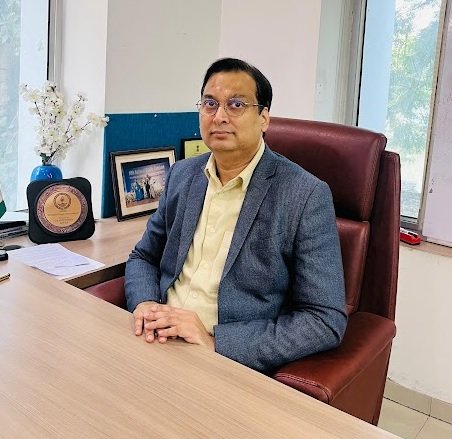
Despite being a major contributor to the economy, the sector continues to face a persistent skills gap across its workforce. According to Dr Syed S Abbas, Director, Institute of Good Manufacturing Practices India, building a scientifically trained workforce is crucial for strengthening India’s rapidly expanding processed food industry. He emphasises that investing in skill development, technical expertise, and industry-oriented training will be key to enabling the sector to scale, innovate, and sustain long-term growth.
The food processing industry in India is expected to undergo a critical phase of growth between now and FY2026. The increasing number of people in the urban sector will result in a surge in demand for food processing products. In addition, improvements in supply chain management and favourable government policies will also boost the industry. The industry is expected to grow to $535 billion by FY26, up from $354 billion in 2024, signifying high double-digit growth.
The food processing sector is a key part of India’s agricultural sector and the country’s manufacturing industries. The sector currently employs approximately 7 million people and has contributed close to 13 per cent of India’s total exports. The export of food processing products alone is expected to exceed $10 billion during fiscal year 2024-25 and thus illustrates that India has a significant role in the global food value chain.
As a result, the rapid growth of the food processing sector creates additional challenges for the food safety system to keep pace with the development and supply of food products.
Transitioning from compliance to scientific based approaches
Traditionally, the food safety system in India used a compliance based food safety system consisting of inspections, certification and meeting requirements. These elements remain critical components of the food safety system; however, the increasing complexity of today’s food system demonstrates a more need for the food safety system to change the way it conducts business.
Good Manufacturing Practices (GMP), Quality Assurance (QA), and Quality Control (QC) are the foundation for the new way of doing things. The act of following GMP will help to ensure that all manufacturing environments are hygienic, consist of standardized product specifications, and result in consistent production practices. QA is responsible for building the preventive components of the system. By embedding safety into the design, documentation, and internal systems of manufacturing, with QC being the verification element to test, inspect, and validate the GMP processes. By bringing these three aspects of building a food safety system together, food safety will no longer be seen as a checklist; instead, it will be viewed as an integral
component of how we manufacture products in an operation based upon science.
The development of the global food supply chain, the continued development of food products with longer shelf life and increased levels of processing have led to the emergence of new food safety risks. They include microbial contamination, chemical residues and cross-contamination within multi-tier supply chain networks. To properly manage these risks, individuals working within the food safety field must be educated on risk assessment, hazard analysis, and predictive food safety systems. Rather than relying on performing inspections on an empirical basis after production has occurred.
A compliance oriented methodology reacts to uncertainties; whereas, a scientific methodology anticipates and deters uncertainties.
The skills gap in readiness for employment
Despite being an enormous economic sector, there exists a continuous skills gap in the overall segment of the workforce. Numerous individuals (millions) work within both the informal sector and the formal workforce. A significant portion of employees within the formal and informal segments lack structured training on food safety science, quality assurance, and global standards.
This gap has been exacerbated in small and medium-sized enterprises that are the cornerstones of India’s food processing ecosystem. As production technologies advance and export markets require increased compliance with international benchmarks, inadequate training can result in product recalls, regulatory problems, and reputational damage.
Current instances of food safety issues; thousands of complaints regarding food adulteration and contamination support the negative effects attributed to fragile on-the-ground implementation.
Thus, the challenge is centered not on creating jobs, but on developing scientifically-based professionals who can successfully navigate complex food systems.
Developing a scientific workforce
To promote food safety, there must be an emphasis on a standardized/structured and scalable method of workforce development. This will require foundational-level courses to transition to advanced, cross-discipline courses that incorporate content. It should be related to microbiology, food chemistry, food supply chain traceability and equipment that utilizes digital systems for monitoring.
Training frameworks must also emphasise real-world application of GMP protocols, QA systems, and QC methodologies to ensure operational readiness from day one. The rise of automation, AI-enabled quality checks, and smart packaging is reshaping how food safety is managed. As the industry modernises, the workforce must be equipped to operate and interpret these technologies effectively.
Equally important is the integration of continuous learning frameworks. Food safety is not static;
it evolves with new pathogens, technologies, and regulatory expectations.
Food safety as a competitive advantage
In a highly competitive market where consumers are well-informed and have an abundance of choices, food safety is becoming a primary focus for building brand loyalty and enabling market access. Today’s consumers’; knowledge levels are increasing, which means they are expecting better traceability, ingredient integrity, and safety assurance from companies worldwide.
Globally, companies who have established credible safety systems based on sound scientific principles are being rewarded by the global marketplace. For India to improve both its competitiveness globally as well as its domestic credibility, it will be very important to have a workforce that has the necessary scientific background within the food processing sector.
The way forward
India’s ability to reach its goal of becoming a global leader in the food processing sector will rely not only on infrastructure and investment but more importantly upon the strength of its human capital. It is no longer acceptable to rely solely on compliance as a means of ensuring food safety, but instead, we must move towards creating a knowledge-based food safety system. A workforce trained in the scientific principles of food processing will determine whether this industry can successfully expand, compete with one another, and earn the trust of consumers in the future.
Food safety is ultimately a measure of capability, accountability and long term visionary philosophy; it is not simply a regulatory check-off.