
Inside BENEO’s new pulse plant: pioneering sustainable protein from faba beans
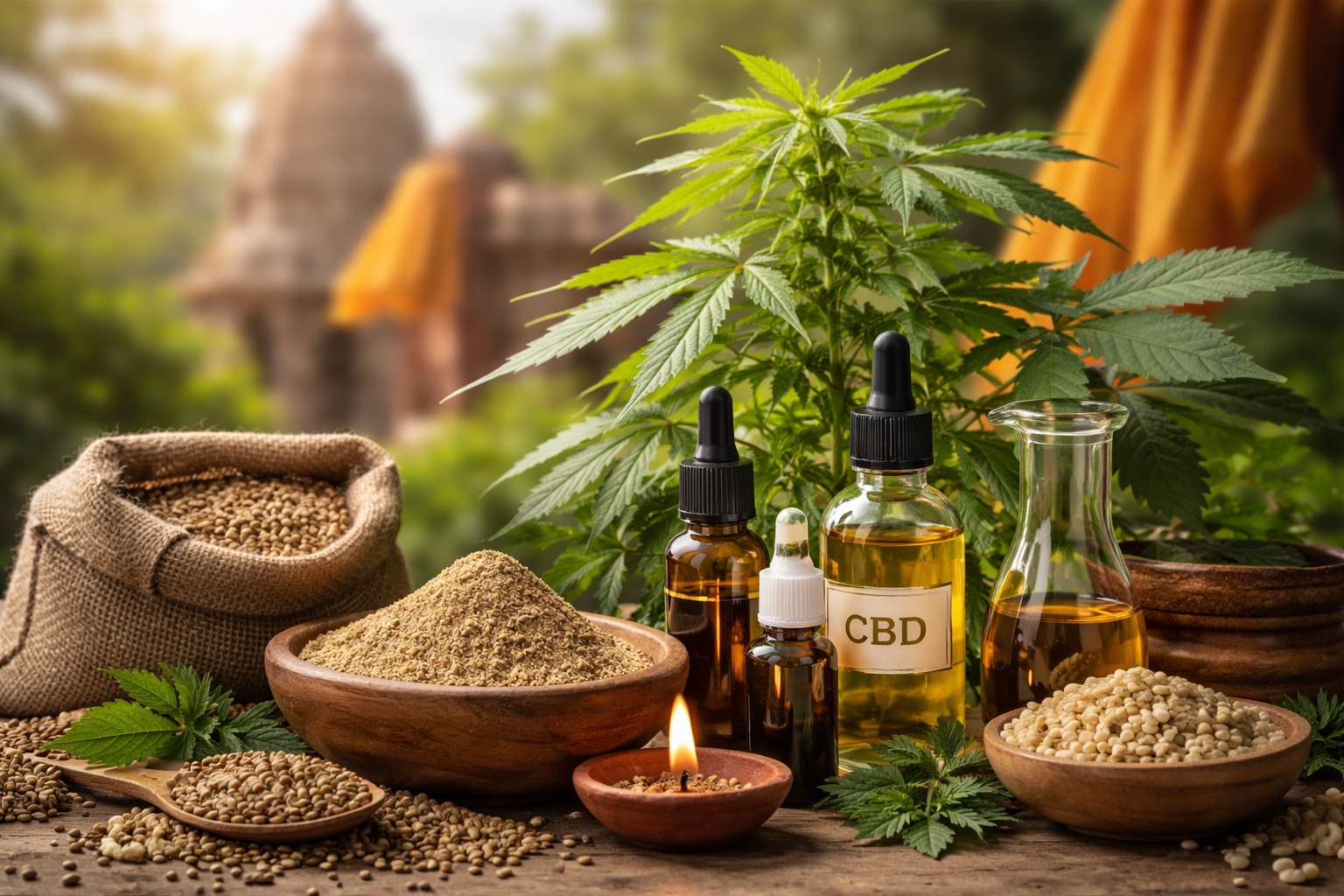
As the world today marks World Cannabis Day, a symbol of a rapidly expanding global cannabis economy, India presents a striking paradox. Despite centuries-old cultural familiarity with cannabis, most visibly through the consumption of bhang during festivals like Holi, the country remains caught in a web of regulatory ambiguity and cautious policymaking.
Historically, cannabis has been embedded in traditional practices and Ayurvedic texts, where it is referred to as “Vijaya” and used in controlled medicinal contexts. Yet, modern India treats the plant with a markedly different lens. The enactment of the NDPS Act in 1985 placed strict controls on cannabis, effectively criminalising its production and use, with limited exceptions.

Shivraj Sharma, Founder and CEO, Wholeleaf, offers a contrasting perspective rooted in India’s legacy systems, “I see India’s cannabis conversation very differently from how it’s often framed. This isn’t a new industry for us—it’s one that has existed for centuries within our traditional systems of medicine. Before the NDPS Act in 1985, cannabis use in various forms was widespread. The Act brought in a necessary layer of control, but it’s important to note that it did not criminalize the entire plant. Leaves, which form the basis of many Ayurvedic formulations, remained permissible—allowing a regulated medicinal pathway to continue.”
This duality, cultural acceptance on one hand and regulatory restriction on the other, has created a unique environment where the plant is neither fully embraced nor entirely excluded. While countries across North America and parts of Europe have transformed cannabis into structured economic sectors, India continues to approach it cautiously, often conflating recreational use with industrial and scientific applications.
Decoding Cannabis: Why Definitions Matter for Industry Growth
A key barrier to meaningful discourse around cannabis in India lies in the lack of clarity around its definitions. Hemp, marijuana, and CBD are often used interchangeably, creating confusion that extends into policymaking, consumer perception, and industry development.
Hemp refers to varieties of the cannabis plant that contain very low levels of tetrahydrocannabinol (THC), the psychoactive compound responsible for the “high.” It is primarily cultivated for industrial purposes, with seeds, fibres, and oils increasingly explored for applications in food, textiles, and nutraceuticals.
Marijuana, by contrast, contains higher levels of THC and is associated with psychoactive and recreational use, making it the primary focus of narcotics regulations.
Cannabidiol (CBD), another compound derived from cannabis, occupies a different space altogether. Non-intoxicating in nature, CBD has gained global attention for its potential role in stress management, sleep support, and pain relief.
Expanding on how the category is evolving within a structured system, Sharma explains, “Today, that pathway is more structured than ever. Yes, licensing is stringent, but that’s not a drawback, it’s a strength. Every formulation goes through approvals under the Ministry of AYUSH, with safety checks, ingredient validation, and increasing clinical backing. This ensures that what reaches patients is both safe and consistent.”
Understanding these distinctions is critical, not just for policy, but for unlocking industry potential. Without clarity, the entire category risks being overshadowed by stigma and misinformation, slowing both innovation and adoption.
Grey, Not Green: India’s Fragmented Regulatory Landscape
India’s cannabis framework today is best described as fragmented and evolving. The NDPS Act remains the central legislation, but its interpretation varies significantly when it comes to different parts of the plant.
While cannabis resin and flowers are strictly regulated, certain uses of leaves and seeds fall into a legal grey area. This has allowed limited, state-regulated consumption of bhang, even as broader applications remain restricted.
Some states, however, are beginning to explore industrial potential. Uttarakhand, for instance, has taken early steps in permitting controlled hemp cultivation for research and industrial use. However, such initiatives remain isolated and lack a cohesive national framework.
For the food and nutraceutical sector, the absence of clear guidelines from the Food Safety and Standards Authority of India (FSSAI) presents a major hurdle. Companies face uncertainty around approvals, ingredient classification, and labelling norms, limiting their ability to scale.

Richa Jaggi, Co-Founder & CMO at Awshad, captures the broader industry sentiment, “As the global conversation around cannabis evolves, India is still finding its footing. Given the current regulatory landscape, it will take time for the country to truly catch up with more mature markets like the US and Canada, where clearer policies have enabled innovation across hemp, CBD, and nutraceutical applications.”
This patchwork regulatory environment creates friction across the value chain, from cultivation and processing to product development and retail, making the sector high-risk despite its potential.
Opportunity vs Reality: Can India Build a Hemp & CBD Economy?
Despite these constraints, early signs of a market are emerging. Hemp-based foods, such as seeds, oils, and protein powders, are gaining traction among urban, health-conscious consumers. Positioned as sustainable and nutrient-rich, they align with the broader shift toward plant-based nutrition.
CBD-based wellness products are also entering the Indian market, often positioned for stress relief, sleep support, and pain management. While still premium and niche, they reflect a growing curiosity among consumers seeking alternatives to conventional solutions.
From a clinical and medical standpoint, the narrative is also evolving. Sharma notes, “What we’re seeing now is a growing acceptance within the medical community itself. Doctors are actively exploring integrative approaches—where Ayurveda and allopathy work together, especially in areas like chronic pain, anxiety, sleep disorders, and recovery. For many patients, these are long-term conditions where gentler, plant-based support can make a meaningful difference.”
“At the same time, the opportunity extends beyond medicine. Hemp as a crop can support rural livelihoods, with seeds offering strong nutritional value and fibers enabling sustainable industrial use,” he adds.
However, the emerging opportunity is tempered by critical challenges. Scientific validation remains limited, with gaps in large-scale clinical research, dosage clarity, and product standardisation. Processing infrastructure, from dehulling technologies to oil extraction efficiency, also remains underdeveloped, while supply chains face issues of consistency and traceability.
Globally, markets such as the United States and Canada have demonstrated what a structured cannabis ecosystem can achieve. Clear regulations, strong R&D backing, and organised supply chains have enabled these countries to build thriving industries across food, wellness, and exports.
India, by comparison, risks being a late entrant, despite having natural advantages such as favourable agro-climatic conditions and a long history with the crop.
Yet, the opportunity remains significant. Hemp offers a sustainable crop alternative, while CBD and related compounds open new avenues in functional wellness.
Reinforcing the importance of awareness and policy evolution, Jaggi adds, “That said, the opportunity here is significant as consumer interest in plant-based wellness and functional nutrition continues to rise. One of the most critical levers for change will be consumer education. As people become more aware of the benefits and distinctions between hemp, CBD, and recreational cannabis, they can advocate more strongly for informed access and progressive policy shifts, particularly in the medical space.”
Further emphasising the road ahead, she added, “India has the potential to build a robust and credible medical cannabis ecosystem, but that will depend on timely, well-structured regulatory action that balances safety, accessibility, and innovation.”
Sharma echoes a similar long-term outlook: “India already has the foundation—a legal framework, traditional knowledge, and a regulated pathway. If we continue to build with responsibility and scientific rigor, this isn’t just an emerging industry—it’s a deeply rooted one, ready to serve millions in a more holistic and accessible way.”
India now stands at a strategic inflection point. With the right regulatory clarity, scientific backing, and industry collaboration, cannabis-derived products could evolve into a credible segment within the country’s nutraceutical and food landscape.
The question is no longer whether the opportunity exists, but whether India is ready to unlock it.
Mansi Jamsudkar Padvekar