
Inside BENEO’s new pulse plant: pioneering sustainable protein from faba beans
Dr Pratibha Singh, Associate Professor, National Institute of Food Technology Entrepreneurship and Management – Thanjavur (NIFTEM-T), Tamil Nadu, India
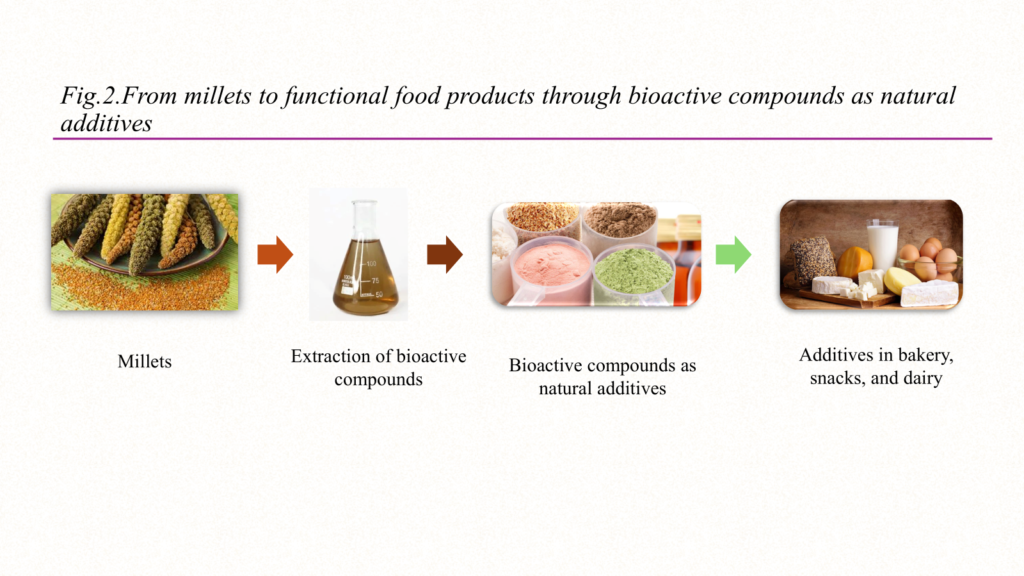
Millets are a group of climate-resilient cereals that have been cultivated for more than 10,000 years and are found mostly in arid and semi-arid areas. Millet contributes highly to global food security because of their exceptional nutritional profile, which includes high fibre, protein, vitamins, minerals, and bioactive substances. Additives extracted from millets and their by-products, such as husk, bran and germ and residual, are functional fibres, bioactive compounds (flavonoids, phenolic acids, peptides) that act as stabilisers and colourants in functional foods. Consumers have started preferring natural additives over synthetic additives as they become more informed about food additives.
Bioactive Components in Millets
Millets are gaining attention as functional foods due to their high nutritional value and health-promoting bioactive compounds. The key bioactive compounds in millets are dietary fibre, flavonoids, tannins and phenolic acids along with other compounds such as carotenoids, tocopherols, phytosterols, saponins, alkaloids and bioactive peptides. Owing to their numerous beneficial properties, such as antioxidant, antiviral, antimutagenic, anti-estrogenic, anti-carcinogenic, anti-inflammatory, and platelet aggregation inhibitory actions, these bioactive compounds are essential for the promotion of health. These compounds also serve as potential natural food additives, providing preservation against bacteria and fungi.
Key bioactive compounds in millets and their health benefits
| Bioactive components | Examples | Millet source | Health Benefits | References |
| Flavonoids | Quercitin, catechin, tricin, luteolin, myricetin | Pearl millet, Finger millet, Sorghum | Cyro-protective, anti-inflammatory, anti-cancerous potential | (Sang et al., 2020) |
| Phenolic acids | hydroxybenzoic acids, hydroxycinnamic acids | Finger millet | antiproliferative, anti-allergic, and anti-inflammatory properties | (Udeh et al., 2017) |
| Bioactive peptides | Protein hydrolysates | Buckwheat, Jower, Foxtail | Antioxidant and Antibacterial activity. | (Majid & Priyadarshini C G, 2020) |
| Dietary fibres | β-glucans, fructansarabinoxylans, starch fract | Finger millet | Hypoglycaemic, hypocholesterolaemic, nephroprotective, | (Jayawardana et al., 2019) |
Bioactive Compounds Extraction Techniques
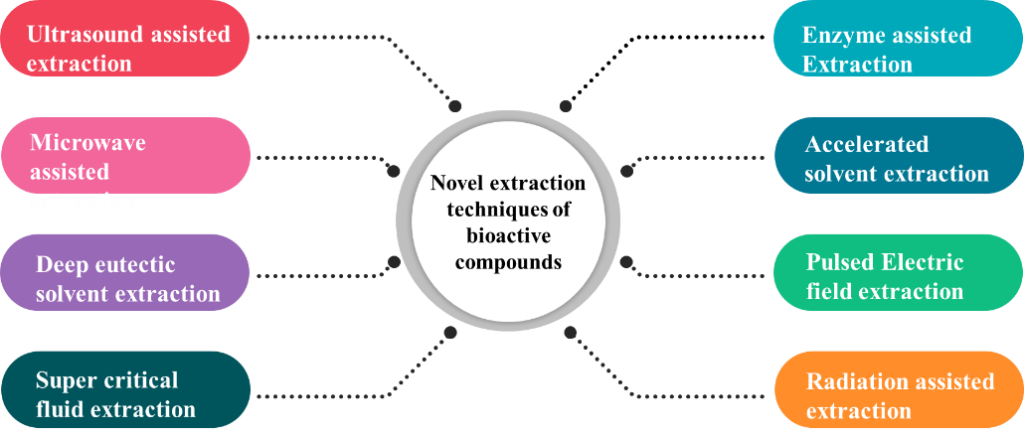
Conventional solvent-based techniques, such as maceration, heat reflux, and Soxhlet extraction, enzymatic treatment, and leaching out, have been used to isolate bioactive compounds from millets and their by-products. Solvent extraction is the most popular method for extracting phenolic compounds (access, 2022). Phenolics are extracted using water at different ratios using methanol, ethanol, acetone, ethyl acetate, and their combinations nowadays, innovative techniques (as shown in adjoining figure) are used for better efficiency and yield. For example, bioactive peptides are extracted from millet gluten by enzyme-assisted extraction without the use of heat. However, these techniques require high-cost equipment.
Advanced Extraction techniques of bioactive compounds from millets
Applications of millet-derived bioactive compounds in foods
In a study, the polyphenolic extract of finger millet acted as an antioxidant and preservative in mayonnaise more effectively than synthetic antioxidants. Flavonoid-rich millet extracts exhibit strong antioxidant activity and can be incorporated into foods and coatings. Bioactive compounds such as dietary fibres (β-glucan and ferulic-rich arabinoxylans) support prebiotic effects and low glycaemic index, and have been incorporated into multigrain millet beverages. Bioactive peptides derived from millet proteins act as antioxidants, emulsifiers, sweeteners, taste enhancers, acidity regulators, and colour thickeners and are used in food processing. β-glucans from millets are isolated and used as thickeners, stabiliser and fat substitutes in foods, because of their cholesterol-lowering properties and regulation of glycaemic response (mejía et al., 2020). Extracted phenolic acids can be effectively incorporated into a variety of food matrices, including bakery, snacks, dairy substitutes, and dietary supplements.
Challenges and future directions
Millets are a rich source of bioactive compounds, which are very promising for use in additives. Although the methods of extraction have changed, there is still a need to conduct more research regarding minor millets. Combined extraction techniques should be evolved to increase the efficiency and yield. The bioavailability, stability, and potential health benefits of these compounds in millet-based products will be significant to justify the methods for possible application in foods.
Millets contain high levels of bioactive compounds that can be used as natural food additives for their health-promoting capacity. The nutritional quality and shelf life can be promoted by the inclusion of millets in functional foods. The use of millet bioactive as waste is also involved in the approach that is sustainable and minimises the application of artificial additives.