
Inside BENEO’s new pulse plant: pioneering sustainable protein from faba beans
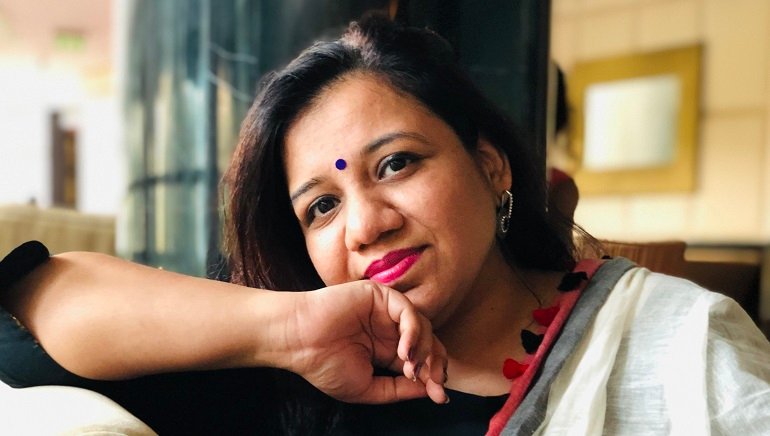
Divyashikha Gupta, Founder of Millwize
As India’s millet movement transitions from policy push to plate-level adoption, a new generation of startups is attempting to redefine how these ancient grains are consumed, perceived, and scaled. Among them, Millwize™ is positioning itself at the intersection of science, convenience, and clean-label nutrition, an approach that goes beyond conventional product innovation to focus on nutrient integrity and bioavailability.
In this conversation with NUFFOODS Spectrum, Divyashikha Gupta, Founder of Millwize™, shares how the brand is building a “scientific D2C millet startup” grounded in deep R&D, traditional processing wisdom, and modern consumer insights. From tackling anti-nutritional factors and enhancing nutrient absorption to developing high-velocity products for quick commerce and global markets, Gupta outlines a vision that seeks to move millets from niche health aisles into everyday consumption.
She also delves into the challenges of maintaining clean-label formulations, scaling as a bootstrapped venture, and differentiating in an increasingly crowded millet landscape, while staying rooted in a mission-driven approach to nutrition, taste, and accessibility. Edited excerpts;
Millwize™ positions itself as India’s first “scientific D2C millet startup.” Can you elaborate on what differentiates your in-house R&D and millet science capabilities from other millet-based brands in the market?
At Millwize™, we do not just ‘manufacture’ products; we curate them with a deep respect for the grain. My passion for millets stems from the belief that India’s nutritional future lies in its past. To honor this, we have integrated our chief millet scientist who comes in with 40 years of millets academic & research expertise from Jabalpur Agriculture University, directly into our DNA. While others might see a trend, we see a calling to restore the molecular integrity of the grain, ensuring every bite reflects the heart and soul we put into the research.
With over 70 SKUs in the pipeline, how are you prioritizing product development across categories like RTE, RTC, and RTD while ensuring consistency in quality and nutritional claims?
We prioritize based on the “friction of adoption.” Consumers want health, but they will not sacrifice convenience & taste. Our focus starts with adding a range of new products to our existing categories of multi millet cookies, natural protein millet nutri bites and only of its kind millet chocolate. We would next like to work towards replacing the “junk” in the pantry by bringing in a range of savoury namkeens, followed by Ready-to-Cook (RTC) formats like pancakes, chilla, dosa pre mixes that simplify traditional cooking. Quality consistency is managed through a rigorous “Gold Standard” batch testing protocol. Every SKU, whether it is functional or ready to cook, must meet the same glycemic load and nutrient-retention benchmarks before it leaves the R&D stage.
The brand emphasizes bioavailability of millets, a key industry challenge. What specific processing or formulation innovations have you implemented to enhance nutrient absorption?
Millets naturally contain anti-nutrients like phytic acid which can hinder mineral absorption. To solve this, we have moved away from standard ultra-processing. We utilize specific traditional-meets-modern techniques, such as controlled sprouting and optimized thermal processing, that break down these inhibitors. By focusing on the bioavailability of protein & other macro & micro nutrients, we ensure that the nutrients listed on our label reach the consumer’s bloodstream rather than just passing through the system.
Given your “Zero-Compromise” clean-label positioning, how do you manage formulation challenges, especially in maintaining taste, texture, and shelf life without artificial additives?
For me, ‘Zero-Compromise’ is not a tagline, it is a personal vow. I have spent countless hours in the kitchen and the lab because I refuse to put a product on the shelf that I would not feed my own family. Managing the balance between taste and a clean label is the hardest part of this journey, but we treat it as a non-negotiable. If a formulation requires a synthetic stabilizer to survive, it does not make the cut. We breathe life into these products using only what nature intended.
You are targeting quick commerce platforms like Zepto, Blinkit, and Instamart. How are you adapting your supply chain and packaging strategies to meet the speed and shelf-life requirements of this channel?
Quick commerce demands “High Velocity, Small Footprint.” Before we go there, we would first want to connect with our consumers directly. They automatically join the Millwize Tribe when they make a purchase through our website. In either case , to meet future Ecom , Quick Com & D2C website demand , we have already started optimizing our secondary packaging for easy sorting and durability during the “last mile” on a bike. Supply-chain-wise, we would utilize a hub-and-spoke distribution model that keeps inventory closer to these micro-warehouses. Because our products are nutrient-dense and stable, we can maintain the 9- 12-month shelf life without the need for cold-chain logistics.
As a bootstrapped venture, what are your strategies for scaling manufacturing and distribution while maintaining cost competitiveness in a price-sensitive market like India?
Our strategy is “Lean Excellence.” Instead of heavy upfront Capex, we have built strategic partnerships with specialized manufacturing units where we oversee the entire process using our own proprietary R&D and formulations. This keeps us asset-light while ensuring we do not pay “middleman” margins. By sourcing grains directly from farmer clusters, we stabilize raw material costs, allowing us to offer a premium product at a price point that is accessible to the middle-class Indian household.
The millet segment is becoming increasingly crowded. How does Millwize™ plan to differentiate itself in both domestic and global markets, especially against established functional and health food brands?
The market is crowded, but there is always room for authenticity. Millwize™ stands apart because we are not just selling a snack; we are championing a lifestyle. I eat, sleep, and breathe this mission because I want to see millets move from the ‘diet’ shelf to the ‘heart of the home.’ Our science backed lens is our foundation, but our passion & obsession with building a world class range of unimagined taste with keeping goodness & wellness at its core is our differentiator. We are building a brand that is as much about emotional well-being as it is about nutritional stats.
With plans for global exports, how are you preparing to meet international regulatory standards, particularly around clean-label claims, gluten-free certification, and nutritional labelling?
We are building for the world from Day 1. Our facility and processes are being aligned with GFSI (Global Food Safety Initiative) standards. We are pursuing rigorous third-party certifications for Gluten-Free and Non-GMO claims. Our labelling is being designed to be compliant with US-FDA and EU regulations, which are often more stringent regarding additive disclosures. We want the Millwize™ label to be a global hallmark of purity & India’s offering to the world.
Can you shed light on your go-to-market strategy for institutional and B2B channels, such as HoReCa, corporate cafeterias, or modern retail, beyond the D2C focus?
For HoReCa and corporate sectors, we are positioning millets as a “Wellness-as-a-Service” offering. We are developing bulk-packs of our RTC range for chefs who want to incorporate healthy, gluten-free options into their menus without changing their entire kitchen workflow. In corporate cafeterias, we are looking at “Healthy Vending” kiosks and snack-box subscriptions for employees, tapping into the growing corporate focus on employee well-being.
Looking ahead, how do you see the role of millets evolving in India’s mainstream snacking ecosystem, and what role will Millwize™ play in shaping this transition?
“I see a future where millets are not a ‘specialty’ item, they are the standard. My goal for Millwize™ is to lead that transition by making millets indulgent and exciting. We are pouring everything we have into shaping this ecosystem because we believe the world deserves food that is as honest as it is healthy. This isn’t just a business for us; it’s our contribution to a healthier, more resilient India.”
Mansi Jamsudkar Padvekar