
Inside BENEO’s new pulse plant: pioneering sustainable protein from faba beans
Arvind Patel, MD, Bharat Vedica – A Patel Venture
In the quiet, misty corners of childhood memories, honey was never just a condiment trapped inside a bottle. It was sacred nectar, a golden gift from nature that arrived in small earthen pots or repurposed glass jars. Many of us remember grandmothers, during hot summer days, stirring a spoonful of that thick, amber liquid into a glass of cool water with a squeeze of lemon, creating a simple, refreshing drink that helped beat the heat while keeping the body energised and nourished. In that deep, floral aroma that would fill the room, there lived an inherent, unspoken trust. It wasn’t just food; it was a core piece of family rituals. However, as people walk through modern supermarket aisles today, that sense of connection feels like it’s slowly fading away. The shelves are lined with rows of identical golden liquid, clear, perfectly uniform, but missing the very soul of the forest. It leaves one with a lingering, melancholic question: When did honey stop being a labour of love gathered from the wild and start being just another product manufactured to meet an industrial quota?
Honey as More Than Food
In the ancient wisdom of Ayurveda, honey is celebrated as a ‘Yogavahi‘. This Sanskrit term describes a substance that acts as a powerful carrier, enhancing the medicinal properties of the herbs it is paired with. It is more than just a sweetener because it represents the Ritam, or the natural order of the environment. According to research published in the National Institutes of Health, honey is a complex biological marvel containing over 200 different substances, including enzymes, minerals, and antioxidants. The ecological purity of honey is fundamentally linked to the symbiotic relationship between bees and the broader spectrum of biodiversity. As honeybees traverse the landscape, pollinating a wide variety of flowering plants, they capture the unique characteristics of a specific season and geographical location. The true essence and genuineness of honey are therefore shaped primarily by the diversity of plants, their flowering cycles, and local climatic conditions, rather than any direct connection to soil. Bees forage on nectar within a limited radius, meaning the honey reflects the immediate floral ecosystem and seasonal bloom patterns. While soil health supports plant growth and influences floral diversity, its role is indirect, impacting the quality and availability of nectar through the plants themselves. Ultimately, it is this dynamic relationship between plants, pollinators, and environment that defines the purity, flavour, and functional properties of honey, rather than soil or broader solar cycles alone.
The Modern Demand Surge and Its Consequences
With the expansion of the global health industry, honey has emerged as the premier natural alternative to processed sugar. This surge in popularity is particularly evident in India, where health-conscious consumers are increasingly replacing sugar cubes with spoonfuls of honey. However, this positive trend has created a significant gap between the natural world and market needs. Natural processes are slow and steady, while the global supply chain requires both speed and large quantities. As consumption increases beyond what beehives can naturally produce, alternative methods are inevitably used. The pressure to maintain low prices and high supply has transformed honey from a seasonal delicacy into a mass-produced commodity.
The Adulteration Economy
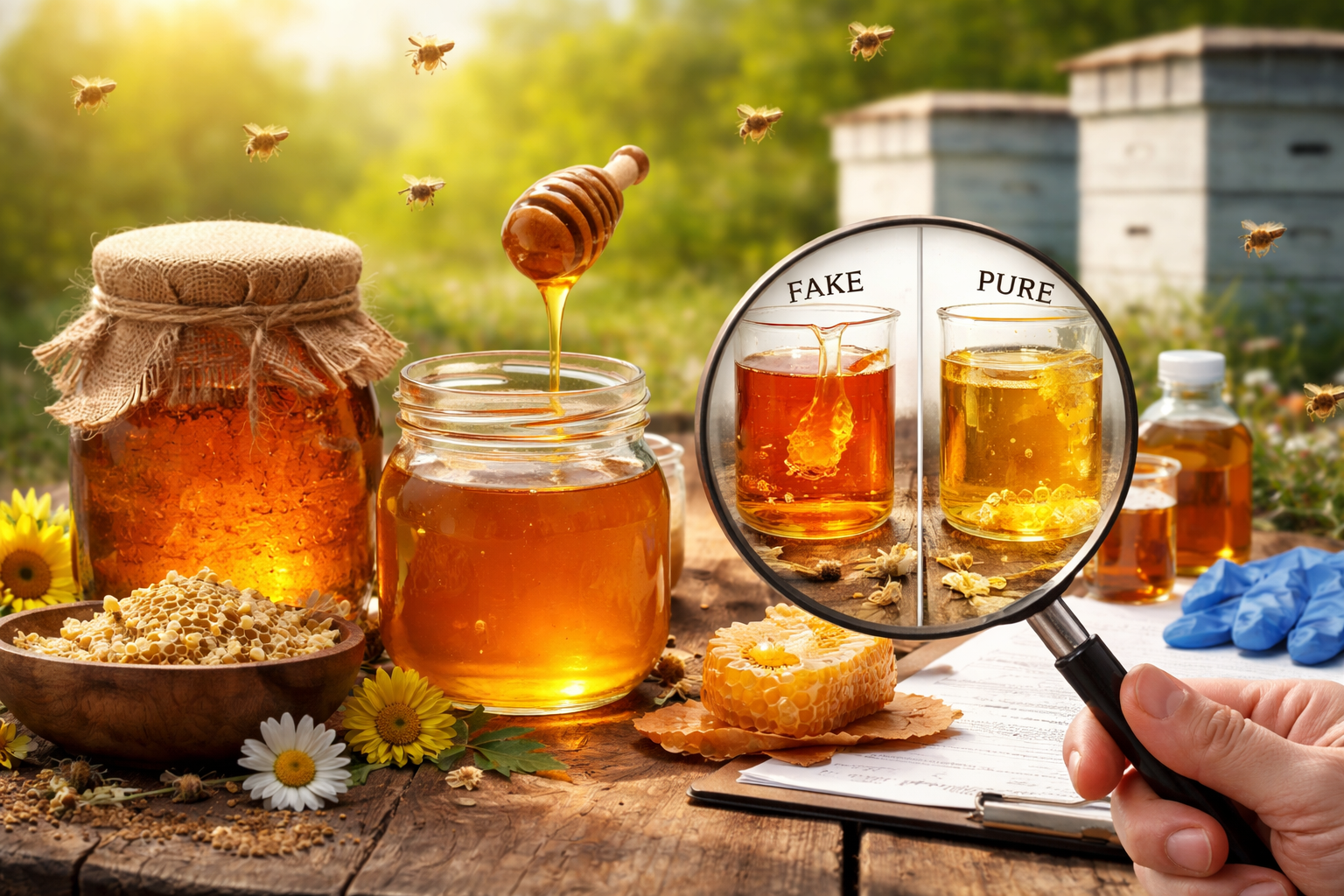
The adulteration economy presents a real problem for those trying to keep things pure. Reports on ResearchGate highlight the most prevalent method: the addition of cheap sugar syrups to honey. High fructose corn syrup and specially formulated rice syrups are often the culprits, chosen for their low production costs and their ability to replicate honey’s texture. This creates a hidden supply chain, where counterfeit honey floods the market, appearing identical to the genuine article. This is a calculated effort to create a product that looks and tastes like honey but lacks any of its nutritional value.
When Even Tests Fail
The struggle for authenticity is further complicated by the fact that traditional testing methods are struggling to keep up. For a long time, standard C3 and C4 sugar tests were enough to catch most fraud. However, as documented in the MDPI journal, new types of syrups are being designed specifically to bypass these regulatory checks. Many commercial honey samples that pass basic quality tests still fail when subjected to more advanced screening. This creates a strange paradox where science and fraud are in a constant race. If industrial syrups can be tailored to meet legal standards while remaining artificial, the definition of Shuddha, or pure honey, must evolve beyond just a lab certificate.
The Invisible Casualties
When artificially cheap honey floods the marketplace and affects beekeepers who practise slow and ethical methods of harvesting, traditional beekeepers cannot compete with the huge amount of cheaper honey on the market. Therefore, those beekeepers are being forced out of their businesses, and this has put pressure on the honey bee populations themselves. These changes to honey bee populations have a domino effect on clusters of pollination and the local biodiversity of the species. Adulteration is not only a form of fraud to consumers but also a disruption to the natural ecosystem.
The Illusion of Choice
Consumers today face a supermarket paradox. Every bottle claims to be raw and pure, yet there is very little transparency about where the honey actually comes from. Many home tests, such as the water test or the flame test, are often misleading and cannot detect modern, sophisticated adulterants. Trust has been outsourced to labels and marketing slogans, losing the ability to recognise the subtle markers of true honey, like seasonality and regional diversity.
Towards a Conscious Honey Economy
Ensuring honey’s true origins requires more than just a barcode scan. Modern food technology, including nuclear magnetic resonance, has become essential for verifying the source of honey. To rebuild consumer confidence, the way honey is presented should move away from industrial plastic and embrace designs that celebrate the beehive itself. A “Beehive to bottle” approach requires packaging that reflects hexagonal honeycombs and supports unheated, raw honey to promote ethical business. Transparency in the process, rather than the perfection of the liquid, defines true quality. One must ask if current methods keep honey pure. Ultimately, protecting the bond between consumers, beekeepers, and bees is essential for real purity.