
Inside BENEO’s new pulse plant: pioneering sustainable protein from faba beans
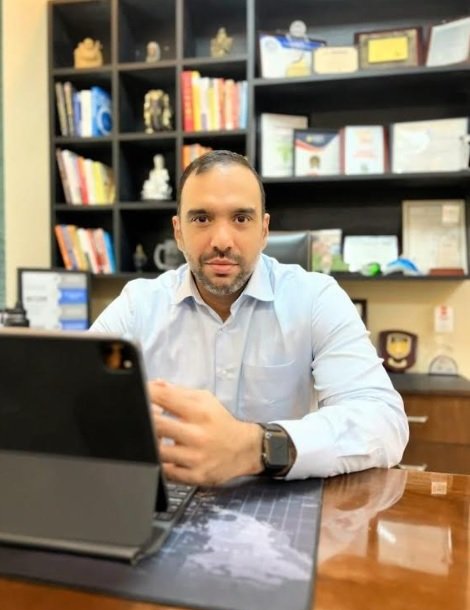
As Indian food brands expand into global markets, the need to comply with stringent international contaminant standards is set to intensify. Reflecting this shift, investments are increasingly aligned with higher compliance benchmarks. Over the past 12–18 months, particularly with the Food Safety and Standards Authority of India (FSSAI) strengthening enforcement on labelling, pesticide limits, and surveillance, the regulatory trajectory in India has become markedly more proactive and less forgiving of lapses. Speaking to NUFFOODS Spectrum India, Ashwin Bhadri, Founder and CEO, Equinox Labs, emphasised that compliance is no longer a periodic requirement—it is a continuous process, regardless of whether businesses are fully prepared for it.
What recent trends are shaping the food safety landscape in India?
A few things are happening simultaneously, and they are reshaping the entire compliance environment.
Over the last 12–18 months, especially with FSSAI tightening enforcement around labelling, pesticide limits, and surveillance, the direction is clear: regulation in India is becoming far more proactive and less tolerant of gaps. Compliance is no longer a periodic exercise; it is continuous, whether businesses are ready for it or not.
The second shift is consumer-driven. People are reading labels, questioning claims, and holding brands accountable in real time. A single incident today doesn’t stay local, it becomes a national conversation within hours.
And third, technology adoption in food safety is accelerating. From digital audit trails to real-time monitoring, compliance infrastructure is becoming far more sophisticated.
The larger shift is this: food safety is moving from a cost centre to a business-critical function. Companies that don’t recognise that early will struggle to scale.
What are the most common food safety violations you observe in India?
After nearly two decades and over 1,50,000 audits across India, the violations are remarkably consistent regardless of the size or type of business.
Temperature abuse tops the list. It contributes to nearly half of all critical violations we observe and remains the single biggest trigger for foodborne illness. Cross-contamination follows closely, and we still find it in 60 to 70 per cent of kitchens without a structured food safety programme.
Beyond that, poor personal hygiene, FIFO violations, reactive pest management, and lack of documented staff training are constants. High staff rotation only amplifies the risk.
In one instance, we audited a mid-sized QSR chain where temperature logs were being filled correctly on paper, but actual storage temperatures were consistently outside safe limits.
The system existed, but it wasn’t being followed. That gap between documentation and reality is where most failures sit.
The root cause across all of this is simple: food safety is treated as compliance, not culture.
Which sectors in the food industry face the highest compliance risks?
Cloud kitchens and quick-service restaurants are at the top of that list right now. The model scales faster than the systems supporting it. You have high order volumes, rapid staff turnover, and limited on-ground oversight, which is a difficult combination from a compliance standpoint.
Street food and small manufacturers are another area of significant risk, largely due to gaps in awareness and infrastructure rather than intent.
Interestingly, even larger, organised players are not immune. We often see compliance fatigue in mid-sized manufacturers where systems exist on paper but are not actively monitored or enforced.
Scale without control is one of the biggest risks in food safety today.
Do you think consumer awareness is influencing food safety practices?
Absolutely, and more than most businesses are prepared for.
Five years ago, a food safety issue or hygiene lapse would fade quickly. Today, it can permanently damage a brand. Consumers are more informed, more vocal, and have platforms to amplify concerns instantly.
We are seeing more brands proactively invest in audits and certifications, not because a regulator asked them to, but because their customers are asking questions.
When market pressure and regulatory pressure move together, industry behaviour changes faster.
The challenge is that awareness is still uneven. While urban consumers are driving accountability, a large part of the market remains less sensitive to these issues.
That is where sustained education initiatives, including programmes like our Million Lives Program, become critical.
What advanced technologies are you currently using in food safety analysis?
Our labs are equipped with advanced analytical instruments, including GCMS, LCMS, ICP-MS, and HPLC systems, enabling detection of contaminants at parts per billion levels.
For microbiology, we use PCR-based methods that significantly reduce turnaround time. On the audit side, our 750+ auditors operate on fully digital systems with real-time reporting, photographic evidence, and same-day insights.
We are also building AI-assisted audit analytics that identify risk patterns across thousands of audits and benchmark clients against industry standards.
The shift we are working towards is simple: from reporting failures to predicting them.
Are you investing in new testing capabilities for emerging contaminants?
Yes, this is a key area of focus. Emerging contaminants such as microplastics, PFAS, and newer pesticide residues are already shaping global regulatory frameworks and will increasingly influence Indian
standards as well.
We are also expanding capabilities in allergen testing and mycotoxin detection, areas where testing levels in India are still lower than the actual risk.
As Indian food brands scale globally, the expectation to meet international contaminant standards will only increase. Our investments are aligned with that direction.
Do your testing protocols align with FSSAI regulations?
All our testing protocols align with FSSAI regulations as a baseline, but we go beyond that by design.
We are an FSSAI-notified and NABL-accredited lab, which means our methods are validated, equipment is calibrated, and reports are audit-ready.
From a client’s perspective, the real value is consistency. A test report is only useful if it stands up to scrutiny every single time.
We also continuously track regulatory updates to ensure our protocols evolve alongside changing standards.
What kind of accreditation do your labs have?
Equinox Labs is NABL-accredited, FSSAI-notified, MoEFCC-certified, and holds ISO 9001, ISO 14001, and ISO 45001 certifications.
Each of these reflects a specific standard our processes are audited against independently. NABL accreditation, in particular, is critical because it ensures that testing methods, equipment, and reporting meet internationally benchmarked criteria.
In food safety, credibility is built on consistency, not just certification.
Tell us about your plans five years down the line.
The vision is clear: to build Equinox Labs into the most trusted name in food, water, and air safety, both in India and globally.
On the testing side, we are expanding capabilities in emerging contaminants and increasing our geographic footprint to improve turnaround times.
On the technology side, Compliance Cloud will evolve into a predictive platform that helps clients anticipate and prevent compliance risks.
We are also investing in education through initiatives like the Million Lives Program. Safe food ultimately depends on informed people across the entire value chain, and that belief continues to guide how we build the business.
Sanjiv Das
sanjiv.das@mmactiv.com