
Inside BENEO’s new pulse plant: pioneering sustainable protein from faba beans
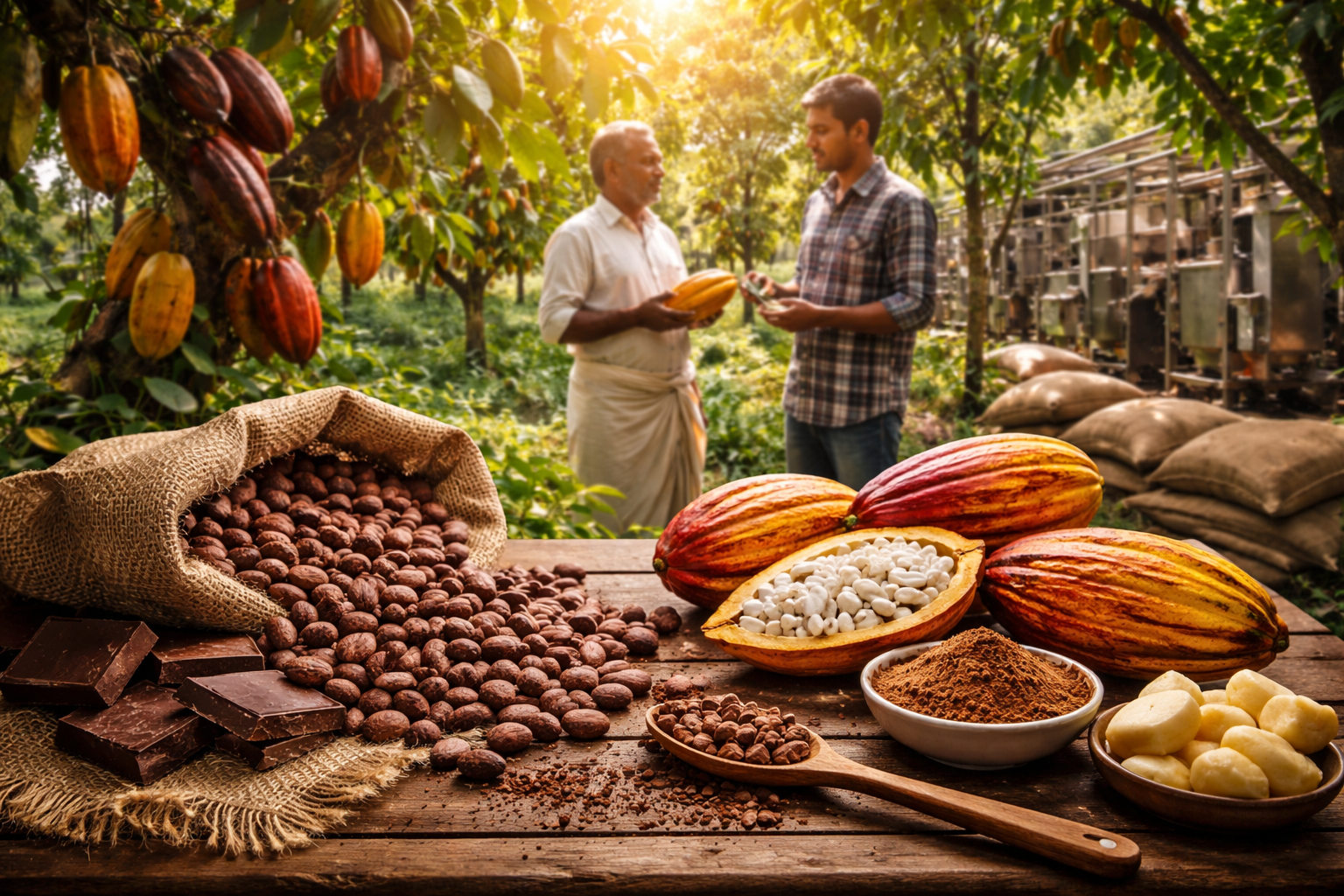
India’s cocoa sector is emerging as a high-potential yet underleveraged opportunity at the intersection of agriculture and food ingredient innovation. While domestic demand for chocolate and cocoa-based products continues to rise, the country remains dependent on imports, exposing a structural imbalance in the value chain.
A recent knowledge paper titled “Empowering the Cocoa Sector,” released by the Federation of Indian Chambers of Commerce & Industry (FICCI) in collaboration with industry stakeholders, brings renewed attention to this gap. The report positions cocoa not just as a crop, but as a strategic lever for farmer income, sustainability, and ingredient-led growth. At a time when India’s food industry is moving toward value-added, functional, and globally competitive products, cocoa sits at a unique intersection of agriculture and industrial opportunity.
From Farm to Factory: Cocoa’s Expanding Role in India’s Ingredient Economy
Cocoa’s relevance in India is no longer confined to confectionery aisles. As consumer preferences evolve toward premium, indulgent, and functional foods, cocoa is increasingly finding applications across bakery, dairy, beverages, and emerging nutraceutical segments. Its antioxidant profile and sensory appeal make it a versatile ingredient, allowing manufacturers to innovate across categories ranging from high-protein drinks to clean-label desserts. This transition is gradually repositioning cocoa from a commodity input to a strategic ingredient within India’s food processing ecosystem.
For companies such as Mondelez India and Nestlé India, which have a strong presence in chocolate and cocoa-based products, the dependence on imported cocoa remains a structural challenge. Similarly, global ingredient players like Barry Callebaut, which operates cocoa and chocolate manufacturing facilities in India, rely on consistent quality and supply of cocoa beans to optimise their processing capabilities. The gap between rising demand and limited domestic production directly impacts sourcing strategies, cost structures, and long-term planning for such companies.
The FICCI report underscores that India’s cocoa demand is growing faster than its production capacity, creating a widening supply gap. For B2B players, this imbalance translates into exposure to global price volatility and supply chain disruptions. In an environment where ingredient security is becoming as important as innovation, cocoa represents both a vulnerability and an opportunity.
What strengthens India’s position, however, is its unique cultivation model. Unlike major cocoa-producing regions that depend on monoculture plantations, India has the advantage of integrating cocoa into existing cropping systems. Cultivation alongside coconut, arecanut, and oil palm allows farmers to diversify income without additional land pressure. This intercropping approach not only improves economic viability for farmers but also aligns with sustainability goals increasingly prioritised by food companies and global buyers.
Bridging the Gap: Why India’s Cocoa Value Chain Remains Fragmented
Despite its strong demand fundamentals and cultivation advantages, India’s cocoa sector continues to face structural bottlenecks that limit its scalability. The report highlights the absence of a cohesive, nationwide strategy for cocoa development. This lack of policy alignment results in fragmented growth, with production concentrated in specific regions and limited coordination between stakeholders.
One of the most critical constraints lies in the availability of high-quality planting material. Cocoa productivity and quality are highly dependent on the genetic characteristics of the crop, yet access to improved, disease-resistant varieties remains inconsistent. This directly affects yield stability and bean quality, creating challenges for processors who require standardised inputs for large-scale operations.
Post-harvest practices further complicate the value chain. Cocoa requires precise fermentation and drying processes to develop its characteristic flavour profile, but these practices are not uniformly adopted across growing regions. As a result, inconsistencies in bean quality persist, limiting India’s competitiveness in both domestic and export markets. For ingredient manufacturers and chocolate producers, this variability creates additional processing challenges and quality risks.
At the industrial level, the report points to an underutilisation of existing processing infrastructure. Companies have invested in cocoa grinding and chocolate manufacturing facilities, but inconsistent raw material supply prevents optimal capacity utilisation. This disconnect between farm-level production and industrial demand reflects a broader issue within the value chain, namely, the absence of strong linkages between farmers, aggregators, processors, and end-users.
For large food companies and ingredient suppliers, this fragmented ecosystem translates into higher sourcing costs and operational inefficiencies. For smaller and emerging brands, it limits access to reliable domestic inputs, often forcing them to depend on imports or compromise on product formulation. In both cases, the lack of a robust cocoa ecosystem constrains innovation and scalability within India’s food industry.
From Ingredient Dependency to Value Leadership: The Road Ahead
India’s cocoa opportunity lies not merely in increasing production, but in building an integrated, value-driven ecosystem that connects agriculture with food processing and global trade. The knowledge paper outlines a clear direction, emphasising the need for coordinated interventions across policy, research, and industry.
Strengthening upstream capabilities will be critical. Investment in research and development can improve planting material, enhance productivity, and standardise quality. Equally important is the need to build farmer capabilities through training in scientific cultivation and post-harvest practices. These interventions can significantly improve both yield and quality, creating a more reliable supply base for industry players.
At the same time, the downstream segment offers significant potential for value creation. Expanding cocoa processing capacities and encouraging ingredient manufacturing can help India move up the value chain, shifting from raw bean production to higher-value products such as cocoa butter, powder, and specialty ingredients. For companies like ITC Limited, which are expanding their presence in foods and value-added products, a stronger domestic cocoa ecosystem can unlock new avenues for product development and sourcing efficiencies.
Public-private partnerships will play a crucial role in enabling this transition. Collaboration between government bodies, research institutions, and industry players can help align incentives, scale best practices, and build infrastructure. Digital integration across the supply chain can further enhance traceability and transparency, factors that are increasingly important for global buyers and sustainability-conscious brands.
Global dynamics also add urgency to this transformation. Traditional cocoa-producing regions are facing mounting challenges, including climate change, declining productivity, and sustainability concerns. As multinational companies seek to diversify sourcing and build resilient supply chains, India has an opportunity to position itself as a reliable and sustainable cocoa origin.
For the Indian food industry, this is a defining moment. Cocoa is no longer just a supporting ingredient; it is becoming a strategic input that influences innovation, supply chain resilience, and competitive positioning. Companies that invest early in building relationships across the cocoa value chain, whether through sourcing partnerships, backward integration, or processing capabilities, stand to gain a significant advantage.
India’s cocoa sector is at a crossroads. The foundation has been laid, demand is rising, and global conditions are favourable. Yet, without a coordinated push, the opportunity risks remaining underutilised. The path forward requires alignment across the ecosystem.
If India can bridge its structural gaps and invest in value addition, cocoa has the potential to evolve from a niche crop into a strategic pillar of the country’s food ingredient economy. The shift from dependency to leadership will not happen overnight, but with the right interventions, it is well within reach.
Mansi Jamsudkar Padvekar