
Inside BENEO’s new pulse plant: pioneering sustainable protein from faba beans
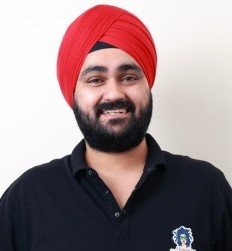
Avneet Singh, Founder & CEO of Medusa Beverages
As India’s beer market enters a new phase of premiumisation and regional expansion, homegrown brands are beginning to challenge the long-standing dominance of multinational players. Among them, Medusa Beverages has been steadily carving out a niche with its contemporary positioning and strong traction in north India, particularly in Delhi.
The latest milestone in its growth journey is its strategic entry into Jharkhand, marking the company’s expansion into eastern India, a region widely seen as the next frontier for beer consumption growth. With rising urbanisation, increasing disposable incomes, and a young demographic driving evolving drinking preferences, states like Jharkhand are opening up new opportunities for premium yet accessible beer brands.
In this interaction, Avneet Singh, Founder & CEO of Medusa Beverages, shares insights into the company’s expansion strategy, distribution ambitions, and how it plans to build relevance in emerging markets while balancing scale with brand equity. Edited excerpts;
Jharkhand marks your entry into eastern India, what specific consumer insights or market gaps made this state a priority for Medusa Beverages at this stage of expansion?
Honestly, it came from a combination of data and conversations on the ground. Jharkhand’s urban population has been growing steadily, and cities like Ranchi and Jamshedpur have a young working demographic that’s spending differently compared to even five years ago. When we looked at the premium beer shelf in these markets, there was a clear gap between the economy segment and the imported or craft options. The contemporary premium space was thin.
India’s beer market is projected to grow at around 8 per cent CAGR through 2028, but that growth isn’t uniform. It’s concentrated in states with younger demographics and rising incomes, and Jharkhand fits that profile. We felt the timing was right for us. We’re entering Jharkhand with humility, ready to learn the market as we go.
You’ve mentioned targeting nearly 90 per cent width of distribution, what operational and supply chain strategies are critical to achieving such deep market penetration in a relatively new territory?
The 90 per cent target is something we’re working towards, not something we expect on day one. In practice, it means identifying the right distributor partners who know local trade, prioritising outlets where our consumer already shops, and making sure supply is reliable enough that we’re not creating empty shelves.
One thing we’ve been careful about is not over-extending before the foundation is solid. In FMCG and alcohol markets, poor availability early on can set a brand back significantly. In India’s beer market, distribution and consistent availability play a critical role in driving repeat purchases and brand loyalty. So the strategy is methodical. Cover the priority outlets well before going broad.
With variants like Medusa Premium, Air, and X entering Jharkhand, how are you positioning each product to cater to different consumer segments within the state?
Medusa Premium is the core, the product we’re best known for. It’s accessible in price, consistent in quality, and that’s what we lead with in any new market.
Medusa Air speaks to a consumer who is more conscious about what they’re drinking. The low-calorie, lower-ABV segment has seen real traction globally, and India is starting to reflect that shift.
Medusa House of Dragon collaboration, it’s aimed at younger consumers who are looking for something with a distinct identity. We don’t expect it to be our volume driver, but it opens conversations and brings in curious first-timers.
Jharkhand has a mix of strong regional and national players, how does Medusa plan to differentiate itself in the premium and contemporary beer segment, especially among young consumers?
The regional brands have deep relationships with trade, and the multinationals have significantly larger budgets. What we have is a genuine product story and an identity that resonates with consumers who are looking for something Indian but aspirational.
Young Indian consumers, particularly in tier-2 cities, are showing increased preference for homegrown brands. Younger consumers are increasingly prioritising authenticity, relatability, and brand meaning over traditional signals indicating that factors like brand origin and identity are becoming more influential in purchase decisions.
We try to tap into that sentiment authentically, not by simply putting an Indian flag on the label. Medusa’s story, the origin, the product quality, the way we’ve grown, it has to actually mean something.
Could you elaborate on your on-ground activation strategy, what kind of consumer engagement initiatives can we expect in cities like Ranchi and Jamshedpur?
The first phase is really about getting the product tried. So a lot of the activation is outlet-led. Sampling drives, visibility at the right restaurants and bars, being present where our consumer already goes out.
We’re also conscious that every market has its own character. What works in Delhi’s nightlife circuit won’t translate directly to Ranchi. So we’re taking time to understand the social occasions and venues that matter locally before we go broad with any campaign.
Point-of-sale and experiential marketing remain among the highest ROI channels for alcohol brands in India, particularly at the trial stage.
How important are in-store visibility elements like shelf placement and chiller branding in driving trials and repeat purchases in emerging beer markets?
It’s more important than most people outside the industry realise. In markets where brand habits haven’t fully formed yet, a significant portion of the purchase decision happens at the point of sale. The consumer walks in with a vague intent and the shelf makes the final call.
Recent retail execution studies across emerging alcohol and FMCG markets show that chilled shelf placement and branded cooler space can significantly improve trial rates compared to ambient or secondary placement, with some research indicating double-digit uplifts in sales driven by better visibility and cold availability.
For us, a chiller presence is not just a visibility play. It also signals that the product is being looked after, that it’s cold and ready. That matters a lot for a first-time purchase.
With rising disposable incomes and urbanisation in states like Jharkhand, how do you see consumption patterns evolving for premium beer over the next 3 to 5 years?
The overall direction is clear, though the pace is hard to predict. As disposable incomes rise, consumers trade up. We’ve seen this happen in north India over the past decade and there’s no reason eastern India won’t follow a similar path.
Jharkhand’s per capita income reached ₹1 lakh for the first time and is expected to increase further because the state economy is growing at a rate of 6 percent each year. The sustained income growth of this kind serves as a reliable prediction for rising discretionary spending which often leads to increased premiumization across all product categories including beer.
The consumption upgrade in beer isn’t just about income. It’s also about exposure, social behaviour, and access to quality products. When those three align, which is happening in Jharkhand’s urban centres, the shift tends to be faster than people expect.
Do you see eastern India becoming the next big growth engine for India’s beer industry, similar to how north India has evolved over the past decade?
I think there’s a strong case for it, though eastern India is quite diverse and I’d be careful about treating it as one market. West Bengal, Jharkhand, Odisha, each has a different regulatory environment, consumer profile, and trade structure.
What they share is significant untapped potential. Beer penetration as a proportion of total alcohol consumption in eastern India remains well below the national average. India continues to be one of the fastest-growing beer markets globally, with low per capita consumption and strong premiumisation trends indicating substantial headroom for growth in underpenetrated regions like the east.
That gap will close over time. Whether that makes it the single biggest growth engine is hard to say, but it will be a meaningful one, and we want to be well established before the wave really builds.
Medusa already commands a strong share in Delhi, what key learnings from that market are you applying as you expand into newer regions?
Delhi taught us a few things we carry everywhere. The first is that product quality has to be the foundation. You can activate, you can brand, but if the beer in the glass doesn’t hold up, none of the rest matters. We have a 10 per cent market share in Delhi today and most of that was built through word of mouth before we had any marketing budget worth mentioning.
The second is that patience matters. Consumer loyalty in beer is earned over multiple purchase cycles, not one. We didn’t try to rush Delhi, and we won’t rush Jharkhand.
The third is working closely with trade. Retailers and distributors who believe in the brand are your best advocates. We’ve tried to be a reliable, fair partner to trade in every market, and that reputation travels ahead of you into new states.
Looking ahead, what are your priorities for scaling distribution vs. building brand equity as you work towards a truly pan-India presence?
In any new market, distribution comes first because brand equity without availability doesn’t convert. A consumer who’s heard of Medusa but can’t find it will just buy something else.
Once we have solid availability in place, the brand investment becomes much more efficient. Every rupee spent on awareness or activation has a place to land, an outlet where the consumer can act on it.
India continues to be one of the fastest-growing beer markets globally, with overall alcohol volumes and premium segments expanding steadily and long-term beer growth projected at around 3–4 per cent CAGR over the next decade.
The honest goal is not just to be listed pan-India but to be genuinely preferred in the markets we’re in. That takes time and we’re willing to take it.
Mansi Jamsudkar Padvekar