
Inside BENEO’s new pulse plant: pioneering sustainable protein from faba beans
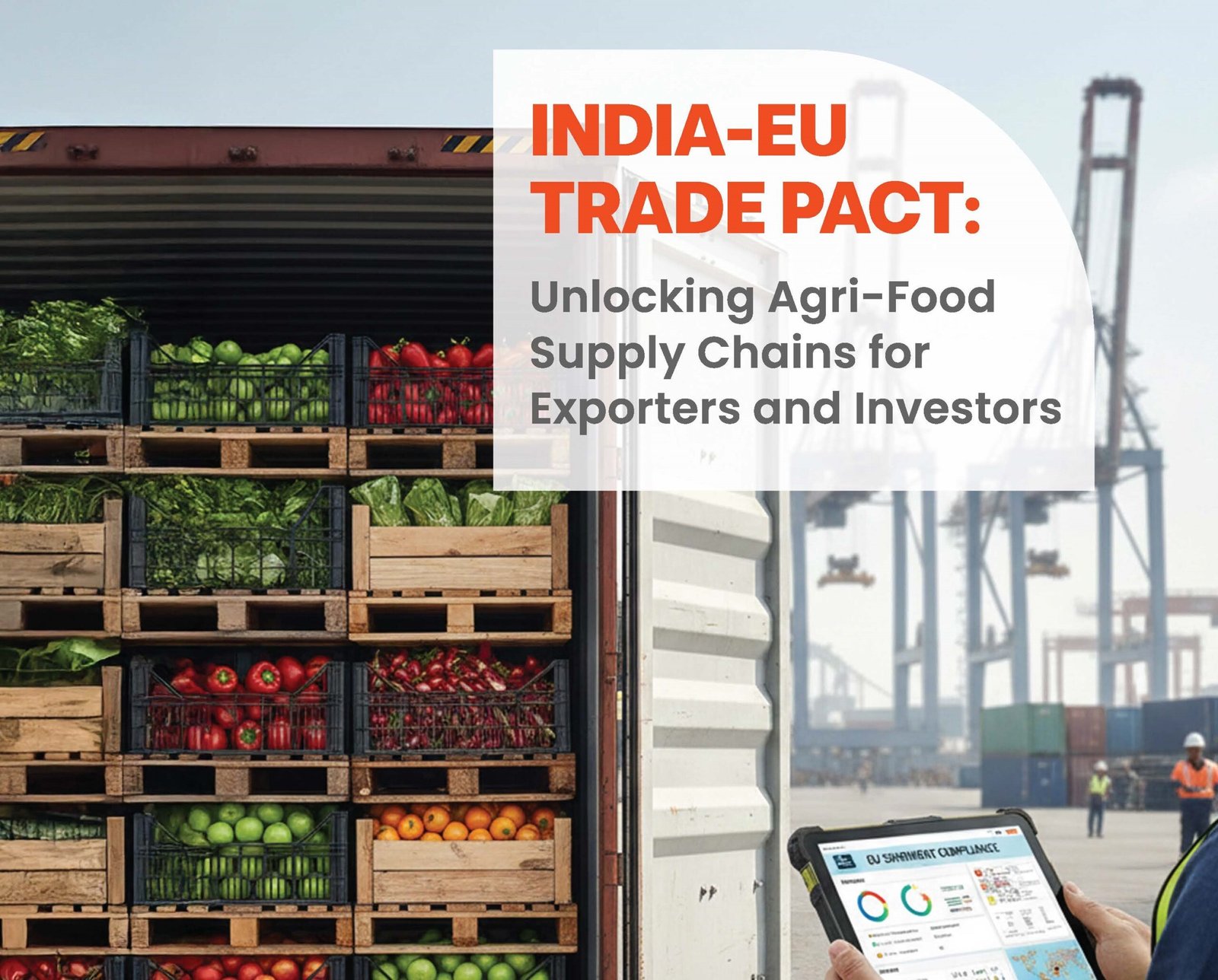
After years of stalled dialogue and renewed engagement, the India–EU trade agreement emerges as a defining development for India’s agri-food and food processing landscape. More than a tariff-reduction framework, the pact carries implications for regulatory convergence, technology adoption, foreign investment, and supply chain integration. For the Indian food and beverage sector, it represents both a gateway to one of the world’s most sophisticated consumer markets and a test of domestic competitiveness. As industry stakeholders prepare for deeper global integration, the agreement could catalyse value addition and innovation, or highlight the structural reforms still required to compete at scale. Let’s explore further.
After nearly two decades of negotiations, India and the European Union (EU) have announced a landmark trade agreement that could reshape the trajectory of India’s agri-food exports and food processing sector. Beyond its geopolitical symbolism, the pact holds tangible implications for exporters, domestic producers, supply chains, and innovation in food manufacturing. As tariffs are reduced and market access expands, the Indian food and beverage (F&B) industry stands at a critical inflection point, one that promises unprecedented opportunities but also exposes structural vulnerabilities.
As negotiations resumed in 2022 after an eight-year pause, both sides signalled that the agreement would extend beyond tariff cuts to include regulatory cooperation, sustainability benchmarks, and digital trade facilitation. For India’s agri-food sector, this is particularly significant because the EU operates one of the world’s most stringent food safety and traceability regimes. Alignment with EU standards could enhance the global credibility of Indian exports, while also compelling domestic upgrades in quality assurance, supply-chain transparency, environmental compliance, and certification systems, areas that increasingly determine competitiveness in high-value international markets.
Quantifying Export Opportunities Across Key Food Categories
The EU is already India’s largest trading partner in goods, with bilateral trade reaching approximately $ 136 billion in 2024–25. However, India’s agri-food exports to the EU have historically faced tariff and non-tariff barriers, limiting their growth potential. The new agreement, which offers preferential access for a wide range of Indian exports, could significantly alter this equation.
In addition to tariff reductions, the agreement is expected to address long-standing sanitary and phytosanitary (SPS) measures, certification protocols, and technical barriers to trade that have often slowed shipments or increased compliance costs for Indian exporters. The EU’s emphasis on traceability, pesticide residue limits, and sustainability disclosures has traditionally required exporters to invest heavily in quality systems and documentation. Greater regulatory cooperation and mutual recognition mechanisms under the trade framework could reduce procedural friction, improve predictability, and create a more stable operating environment for Indian agri-food companies seeking long-term contracts in European markets.
Spices, Tea, and Coffee: Scaling Traditional Strengths
India is the world’s largest exporter of spices, with exports valued at over $ 4 billion annually. Europe accounts for a substantial share of this demand, particularly for pepper, turmeric, chilli, and value-added spice blends. Reduced tariffs and simplified regulatory pathways could help Indian exporters expand their footprint in high-value European markets, especially in premium and organic segments.
Beyond tariffs, compliance with the EU’s stringent maximum residue limits (MRLs), aflatoxin standards, and sustainability certifications remains central to expanding market share. The trade agreement could facilitate closer dialogue between regulators, enabling better alignment on testing procedures and inspection protocols. This may particularly benefit exporters investing in organic, fair-trade, and geographically indicated (GI) products such as Darjeeling tea and specialty coffee varieties. As European consumers increasingly prioritise ethical sourcing and environmental sustainability, Indian producers with robust traceability systems and farm-level certification could capture higher-value niches rather than competing solely on price.
Similarly, tea and coffee exports are poised to benefit from improved market access. The EU is one of the largest importers of Indian tea and coffee, but price competitiveness has often been constrained by tariffs and compliance costs. With lower duties, Indian producers could enhance their presence in specialty and sustainable product categories, where European consumers are willing to pay a premium. Additionally, demand for single-origin, sustainably cultivated, and certified products continues to rise across European retail chains and specialty stores, presenting opportunities for Indian estates that meet environmental and social governance benchmarks.
Marine Products: High Growth, High Sensitivity
Marine products, particularly shrimp, represent one of India’s most lucrative agri-export segments, with exports exceeding $ 7 billion annually. Europe is a key destination, but Indian exporters have struggled with anti-dumping duties, stringent quality standards, and fluctuating tariffs.
The EU’s strict monitoring of antibiotic residues, traceability requirements, and sustainability standards has often led to periodic shipment rejections and increased compliance scrutiny. As a result, exporters have had to invest significantly in hatchery controls, feed quality management, and processing plant certifications. The trade deal’s structured engagement on regulatory cooperation could improve transparency in inspection procedures and create clearer compliance pathways for exporters. Enhanced predictability in trade rules would help marine exporters plan production cycles and pricing strategies more effectively.
The trade deal’s promise of preferential access could unlock significant growth potential. Industry estimates suggest that even a 5–10 per cent reduction in trade barriers could translate into hundreds of millions of dollars in additional export revenues. However, this segment also highlights the vulnerability of Indian exporters to regulatory shifts and global trade politics. Long-term competitiveness will depend not only on tariff advantages but also on sustained investments in cold chain infrastructure, processing technology upgrades, and internationally recognised certification standards such as HACCP and BRC.
Processed Foods: The Emerging Frontier
Perhaps the most transformative impact of the deal lies in processed foods, ready-to-eat meals, snacks, bakery products, nutraceuticals, and functional foods. Europe represents a high-value market where demand for ethnic foods, plant-based products, and health-oriented offerings is rising rapidly.
European retail markets are characterised by strong private-label penetration, stringent labelling norms, and growing demand for clean-label and sustainably packaged products. Indian companies seeking to expand into this segment will need to align with EU regulations on additives, health claims, and packaging sustainability. The trade agreement’s emphasis on regulatory cooperation could ease market entry barriers for compliant manufacturers and encourage greater investment in product reformulation, research, and packaging innovation.
For Indian food processors, tariff reductions could make exports economically viable at scale. If leveraged effectively, the agreement could accelerate India’s transition from a commodity-driven exporter to a value-added food supplier. Over the next five to ten years, processed food exports to the EU could emerge as one of the fastest-growing segments in India’s agri-trade portfolio. Growth in diaspora-driven demand, coupled with mainstream European consumer interest in global cuisines and plant-based alternatives, further strengthens the commercial case for Indian brands willing to invest in quality assurance and distribution partnerships.

Highlighting this shift, Sanjaya Mariwala, Executive Chairman and Managing Director of OmniActive Health Technologies, noted, “The value of the India–EU trade deal extends far beyond headline tariff reductions. For those of us in preventive healthcare, the gains from this deal go far beyond export volumes. Europe’s regulatory depth and science-led approach will facilitate stronger clinical validation, better traceability, and higher compliance standards in India. That discipline will ultimately build consumer trust in nutraceuticals, not only in Europe but across the globe. At the same time, Europe’s ageing population and focus on wellness align naturally with India’s ayurveda knowledge, strengths in nutrition science, and cost-efficient advanced manufacturing. This is how India moves from being a supplier to becoming a global health partner.”

Echoing similar optimism from the botanical extracts sector, Madhu Krishnamani, Founder and Managing Director of Botanic Healthcare, observes, “The India-EU trade deal gives Indian herbal and botanical extract makers a big chance to grow their businesses in Europe’s highly regulated markets. The agreement will help Indian producers better meet the EU’s strict safety, traceability, and scientific validation requirements by encouraging regulatory cooperation, lowering tariff barriers, and promoting the alignment and mutual recognition of quality standards. This news is a big boost for Botanic Healthcare that have always put money into advanced extraction technologies, strong quality management systems, end-to-end traceability, and strong scientific evidence. It not only makes it easier to get into important European markets, but it also strengthens our ability to market Indian botanicals as trustworthy, compliant, and innovative solutions for European wellness, food, and nutraceutical brands. We see this as a chance to speed up investments in compliance infrastructure, open supply chains, and clinical validation. This will help us form long-term, value-driven partnerships based on quality, openness, and trust.”
Risks to Domestic Producers and Small Exporters
While the export narrative appears promising, the trade deal also raises critical concerns about domestic industry resilience and inclusivity. Trade liberalisation agreements typically create asymmetrical adjustment pressures, particularly in sectors where productivity gaps exist. The European Union’s food industry benefits from advanced mechanisation, established branding, strong retail integration, and long-standing regulatory harmonisation across member states. In contrast, parts of India’s food ecosystem remain fragmented, with uneven infrastructure and limited scale efficiencies. Without parallel domestic reforms in logistics, quality control systems, and financial access, certain segments may struggle to compete effectively in a more open trade environment.
Competition from European Imports
One of the most immediate risks stems from reduced tariffs on European imports into India. The agreement is expected to lower duties on a range of products, including agricultural inputs, processed foods, and machinery. While this could benefit Indian manufacturers through cheaper inputs, it may also intensify competition from European food brands known for quality, branding, and technological sophistication.
The EU’s food sector operates under high productivity standards and often benefits from structured agricultural support mechanisms under the Common Agricultural Policy (CAP). European companies also possess strong distribution networks and brand recognition in premium segments. As tariffs are phased down, imported specialty cheeses, processed meats, bakery products, and gourmet foods could become more price-competitive in urban Indian markets, particularly within organised retail and e-commerce channels that cater to affluent consumers.
For domestic producers, especially small and medium enterprises, this could translate into margin pressures and market share erosion. Segments such as premium dairy products, confectionery, bakery, and specialty foods may witness increased penetration by European players. Indian MSMEs, which often operate on thinner margins and limited working capital, may face pricing pressure if they are unable to match quality certifications, packaging standards, or marketing investments required to compete with established international brands in higher-value segments.
The MSME Challenge
India’s agri-export ecosystem is heavily dependent on micro, small, and medium enterprises (MSMEs). These players often lack the financial resources, technological capabilities, and regulatory expertise required to comply with stringent European standards on food safety, traceability, and sustainability. According to government data, MSMEs account for a substantial share of India’s manufacturing output and exports, but many operate with limited automation and fragmented supply chains. Compliance with EU norms, such as detailed traceability documentation, sustainability reporting, and third-party certification, can significantly increase operational costs for smaller firms.
While large exporters are well-positioned to capitalise on the trade deal, smaller players risk being left behind. The cost of certification, compliance, and logistics could offset the benefits of tariff reductions, creating an uneven playing field within the Indian export sector. Meeting requirements related to maximum residue limits (MRLs), labelling standards, packaging sustainability directives, and audit-based certification systems requires both capital expenditure and specialised expertise, which smaller enterprises may need institutional support to access.
Safeguarding Sensitive Sectors
Recognising these risks, India has prudently safeguarded sensitive sectors such as dairy, cereals, poultry, soy meal, and certain fruits and vegetables. This reflects a strategic balancing act between export ambitions and domestic food security. Many of these sectors support millions of smallholder farmers and cooperative networks, particularly in dairy and grain production. Gradual liberalisation, tariff-rate quotas, or exclusion lists are common instruments used in trade agreements to cushion vulnerable segments during transition periods.

While dairy remains protected in the current framework, long-term competitiveness will increasingly depend on structural modernisation and technology-led quality transformation. Ranjith Mukundan, CEO and Co-Founder of Stellapps Technologies, said, “India is already the world’s largest milk producer, with over 248 million tonnes annually, giving us unmatched scale and a deep farm base with 80 million small holder farming families and over 300 million cattles. As trade engagement with the EU advances, competitiveness will depend on building trust through technology led quality transformation. Investments in digitised milk procurement, farm management systems and automated quality testing at the point of collection create transparency at the source. Integrated processing plant controls, real time quality analytics and end to end traceability from cow to consumer ensure consistency, compliance and freshness across the value chain. By embedding digital traceability and quality management into every stage, Indian dairy manufacturers can meet stringent global standards while reinforcing consumer confidence at home and abroad.
Dairy also plays a critical role in India’s protein security, serving as one of the most accessible and affordable sources of high quality protein for millions of households. As consumer demand shifts toward higher protein and value added products, technology and policy support for infrastructure modernisation, quality harmonisation and export readiness will position Indian dairy not only to respond to premium imports but to compete confidently in global protein rich dairy markets.”
The long-term implications remain complex. Overprotection could limit innovation and competitiveness, while excessive liberalisation could destabilise domestic markets. The success of the trade deal will therefore depend on how effectively India manages this delicate equilibrium. Complementary domestic policies, such as technology upgradation schemes, credit access, export facilitation programmes, and infrastructure investments, will be critical to ensuring that trade gains are broad-based rather than concentrated among a limited number of large players.
Implications for Supply Chains, Investment, and Innovation
Beyond trade volumes, the India–EU agreement could catalyze structural transformation across India’s food supply chains.

Arun Om Lal, Industry Chair Prof. NIFTEM, Kundli says, “The India–EU trade agreement represents a watershed moment for the Indian agri-food sector, promising not only expanded market access but a structural transformation of how food is processed, moved, and commercialised across value chains. Beyond tariff liberalisation, the agreement creates pathways for infrastructure modernisation, foreign investment inflows, and deeper integration of India into global food value chains.”
He further adds, “For policymakers, the central question is not whether trade volumes will rise, but whether India can leverage this agreement to accelerate value addition, reduce systemic inefficiencies, and position itself as a global food manufacturing and export hub. At its core, this pact signals a shift from traditional commodity exports toward a more sophisticated, quality-driven, and innovation-oriented agri-food economy — and nowhere is this more consequential than in the domains of infrastructure modernisation, foreign investment, and integrated global supply chains.”
Supply Chain Integration and Modernisation
The agreement is expected to deepen supply-chain integration between India and Europe. Reduced tariffs on machinery, electrical equipment, and chemicals could lower the cost of modernizing food processing facilities in India. This is particularly significant for sectors such as cold chain, packaging, and automation, where European technology is often considered best-in-class.
Improved logistics and infrastructure, combined with greater access to European markets, could encourage Indian companies to invest in scalable, export-oriented production models. Over time, this could enhance India’s competitiveness in global agri-food value chains.

Highlighting the scale of opportunity and the compliance realities that accompany it, Priyank Patel, CEO, Shree Maruti Integrated Logistics and Co-founder, Coldverse, notes, “India’s export momentum is strengthening, with combined exports during April–January FY 2025-26 touching roughly $ 720 billion, reflecting steady global demand despite economic headwinds. The European Union is already India’s largest trading partner, with bilateral trade exceeding $ 130 billion, and the new framework under the India-EU Free Trade Agreement (FTA) is expected to unlock preferential access across most product categories. For India’s agri-food sector, spanning fresh produce, seafood, dairy, processed foods, and ready-to-eat categories, this creates a significant opportunity to move up the value chain into higher-margin, premium markets.
However, the EU is also one of the world’s most compliance-intensive food markets. Temperature integrity, end-to-end traceability, contamination prevention, and audit-ready documentation are non-negotiable requirements. Cold chain modernisation, therefore, becomes mission-critical, not just to reduce post-harvest losses, but to ensure Indian exporters can deliver consistent quality at scale. Fragmented infrastructure creates variability; integrated, technology-enabled cold chains create trust and global competitiveness.
At Coldverse, we see ourselves as part of India’s export-readiness infrastructure. We are actively progressing toward global accreditations, including BRCGS Food Safety Certification (under progress), aligning our operations with international benchmarks to build export-grade reliability from farm gate to global destination.”
Investment Flows and Joint Ventures
The European Commission has emphasized that the agreement will support investment flows and foster deeper economic cooperation. For the Indian F&B sector, this could translate into increased foreign direct investment (FDI), joint ventures, and technology partnerships.
European companies may view India not only as a consumer market but also as a manufacturing and export hub for Asia and Africa. Conversely, Indian companies could leverage partnerships with European firms to access advanced technologies, R&D capabilities, and branding expertise.
Adding to this, Arun Om Lal says, “The India–EU deal promises to accelerate foreign direct investment and cross-border collaborations. European firms bring not only capital, but decades of specialised expertise in food technology, standards compliance, and logistics optimisation. As barriers soften, we are likely to see a surge in joint ventures between Indian processors and European incumbents targeting segments such as dairy refinement, plant-based proteins, specialty beverages, and functional foods. These partnerships can serve as conduits for technology transfer — from predictive analytics for cold chain management to aseptic processing and sustainable packaging solutions. The EU’s regulatory focus on food safety and traceability complements India’s own agenda under initiatives like ‘Make in India’ and ‘Atmanirbhar Bharat.’ The outcome could be a hybrid model where Indian scale meets European precision — speeding up the commercialisation of next-generation food products for both domestic and global markets. The India–EU agreement is likely to catalyse higher FDI inflows into food processing, ingredients, nutraceuticals, and sustainable packaging. Joint ventures and technology partnerships can accelerate diffusion of best practices, particularly in areas such as low-energy processing, waste valorisation, and functional foods. Importantly, such collaborations align well with India’s policy priorities under Make in India, Production Linked Incentives (PLI) for food processing, and the transition toward sustainable and resilient food systems. Regulatory clarity, fast-track approvals, and harmonisation of food standards with EU norms will be essential to attract long-term, technology-intensive investments rather than purely market-seeking capital.”
Innovation in Food Processing and Sustainability
The trade deal also has implications for innovation, particularly in areas such as fortified foods, plant-based products, nutraceuticals, and sustainable packaging. Europe’s stringent regulatory frameworks and consumer expectations could push Indian companies to upgrade their product quality, traceability systems, and sustainability practices.
This could accelerate the adoption of advanced food technologies, from precision fermentation to digital traceability and circular economy models. In the long run, the agreement may serve as a catalyst for India’s evolution into a globally competitive, innovation-driven food processing hub.
A Defining Moment for India’s Agri-Food Future
The India–EU trade agreement is more than a commercial pact; it is a strategic milestone that could redefine India’s position in global agri-food trade. For exporters, it opens doors to one of the world’s most lucrative markets. For domestic producers, it presents both opportunities and existential challenges. For the broader ecosystem, it signals a shift toward deeper integration, higher standards, and innovation-led growth.
Yet, the ultimate impact of the deal will depend not merely on tariff reductions but on India’s ability to build institutional capacity, support MSMEs, and align domestic policies with global trade realities. If managed strategically, the agreement could mark the beginning of a new era for India’s food and beverage industry, one characterised by global competitiveness, technological advancement, and sustainable growth. If not, it risks becoming a story of uneven gains and missed opportunities.
For India’s agri-food sector, the message is clear: the gates to Europe are opening, but only those equipped to meet its demands will truly benefit.
Mansi Jamsudkar Padvekar