
Inside BENEO’s new pulse plant: pioneering sustainable protein from faba beans
Food additives have become a subject of widespread debate, often shaped more by perception than science. While many additives have been used safely for decades, misinformation especially on social media has created confusion and distrust. This article offers a clear, evidence-based overview of food-additive safety, with special focus on glutamates such as monosodium glutamate (MSG). It highlights why global scientific systems like the Joint FAO/WHO Expert Committee on Food Additives (JECFA) are essential, explains how additive safety is evaluated, summarises the global consensus on MSG, and outlines what India can learn from international best practices.
Despite a long history of safe use, several food additives have been wrongly labelled as “unsafe” or “harmful.” Public anxiety today is often fuelled by anecdotal reports, misleading terms such as “chemical-free,” and assumptions that anything “processed” is undesirable. Such narratives overlook the fact that many additives are simply purified forms of naturally occurring substances and that each undergoes extensive scientific evaluation before approval.
As India’s food system grows in scale and complexity, regulatory decisions must remain anchored in reliable scientific evidence rather than unverified claims. This is precisely why expert bodies such as JECFA, Codex Alimentarius, and established national regulators exist: they evaluate additives through rigorous toxicology, clinical data, and real-world dietary exposure, ensuring that consumers are protected while innovation continues.
Why India Needs a Science-Based, Globally Harmonised Framework
India’s food ecosystem is modernising rapidly, with rising consumer expectations around taste, affordability, safety, and nutritional quality. To support this transformation, the country requires regulatory standards that are predictable, internationally aligned, and based on robust scientific assessment. In the area of food additives, the most authoritative global reference is the JECFA set up in 1956. Its evaluations underpin Codex standards, which in turn guide global trade, regulatory consistency, and consumer confidence.
JECFA: The World’s Most Authoritative System for Additive Safety
Codex Alimentarius recognised under WTO agreements relies directly on JECFA’s risk assessments. This ensures global consistency in additive approvals, acceptable daily intakes (ADIs), exposure estimates, and good manufacturing practice (GMP) limits. Countries benefit from a harmonised reference that avoids duplication and promotes regulatory stability.
JECFA’s strength lies in its transparent and rigorous scientific methodology. It evaluates comprehensive toxicological and clinical studies, identifies NOAEL (No-Observed-Adverse-Effect Level), or benchmark dose values, applies established uncertainty factors, uses realistic global exposure modelling, and focuses on actual dietary risk rather than theoretical concerns.
Because of this approach, almost all developing and emerging economies across Asia, Africa, Latin America, and the Middle East rely on JECFA. For a diverse market like India, JECFA offers clarity, predictability, and internationally aligned benchmarks essential for both public health and industry growth.
How JECFA Sets ADIs and Warning Labels
JECFA applies a clear, evidence-based framework when classifying additives. Depending on available data, it may assign:
- a numerical ADI,
- a group ADI for related substances,
- a temporary ADI when more evidence is required, or
- “ADI Not Specified” when total intake poses no health concern at normal use levels.
MSG falls into the category “ADI Not Specified” JECFA’s strongest safety classification.
Warning labels are recommended only when there is consistent human evidence of risk for a clearly identified vulnerable group. Sulphites, for example, require warnings for certain individuals with asthma due to well-characterised sensitivity reactions. These decisions are grounded in reproducible science, not speculation.
For MSG, JECFA finds no allergic mechanism, no intolerance mechanism, no metabolic condition requiring avoidance, no risk during pregnancy or infancy, and no evidence of neurotoxicity at normal intake levels. Therefore, MSG requires only standard ingredient declaration (“Flavour Enhancer INS 621”). Caution statements directed at infants or pregnant women have no scientific justification.
MSG: Global Scientific Consensus and Regulatory Alignment
Over more than five decades of evaluations (1970–2022), JECFA has consistently concluded that MSG is safe for human consumption and merits “ADI Not Specified.” It has also clarified that MSG is metabolically identical to naturally occurring glutamate found in tomatoes, mushrooms, cheese, meat, and even breast milk.
Regulators across the world including the US Food and Drug Administration (FDA), Health Canada, Singapore Food Agency, Japan and Korea, the Association of Southeast Asian Nations (ASEAN) authorities, and Food Standards Australia New Zealand (FSANZ) echo this conclusion. Such alignment reflects one of the strongest and most stable scientific consensus in the field of food safety.
The European Food Safety Authority (EFSA’s) 2017 numerical ADI was shaped by Europe’s precautionary regulatory culture and unique dietary assumptions, making it less relevant to India. Even EFSA does not specify any warning directed at infants or pregnant women. Importantly, EFSA is now re-evaluating its own position. This strengthens the case for India to rely on the stable, globally harmonised JECFA assessment.
Why India Should Follow JECFA’s Assessment of MSG
There are six compelling reasons:
- Global scientific consensus: JECFA’s conclusions reflect decades of data, including from Asian populations with the highest MSG consumption and long-established safety.
- Supports sodium-reduction goals: Replacing part of salt with MSG can lower sodium by 30–40 per cent without compromising flavour—critical for reducing hypertension risk. MSG also enhances acceptance of vegetables among children and improves food intake among older adults.
- Warning labels would be scientifically incorrect: No evidence supports warnings for pregnant women, infants, or the general population. Such labels may mislead consumers and undermine sodium-reduction strategies.
- Avoids unnecessary industry disruption: Arbitrary limits or warnings could force needless reformulation, burden small businesses, disrupt exports aligned with Codex, and provide no public-health benefit.
- More relevant to India than European interpretations: India’s culinary style and flavouring practices resemble Asian dietary patterns, where MSG safety is well established.
- Ensures regulatory stability and global credibility: Aligning with JECFA strengthens India’s scientific standing, supports innovation, and enhances trust across industry, consumers, and trading partners.
Conclusion
India should anchor its food-additive decisions including on MSG within the JECFA–Codex framework, the world’s most authoritative and scientifically rigorous system for additive evaluation. JECFA’s long-standing classification of MSG as “ADI Not Specified” reflects extensive global evidence and requires nothing beyond normal ingredient declaration. With EFSA re-examining its own position, India has an even stronger reason to follow JECFA’s consistent, harmonised, and evidence-driven approach.
Doing so will help India strengthen scientific credibility, support sodium-reduction goals, enable innovation, avoid consumer confusion, maintain Codex/WTO alignment, and build lasting public trust in its food-regulatory system.
Author’s Note and Acknowledgement
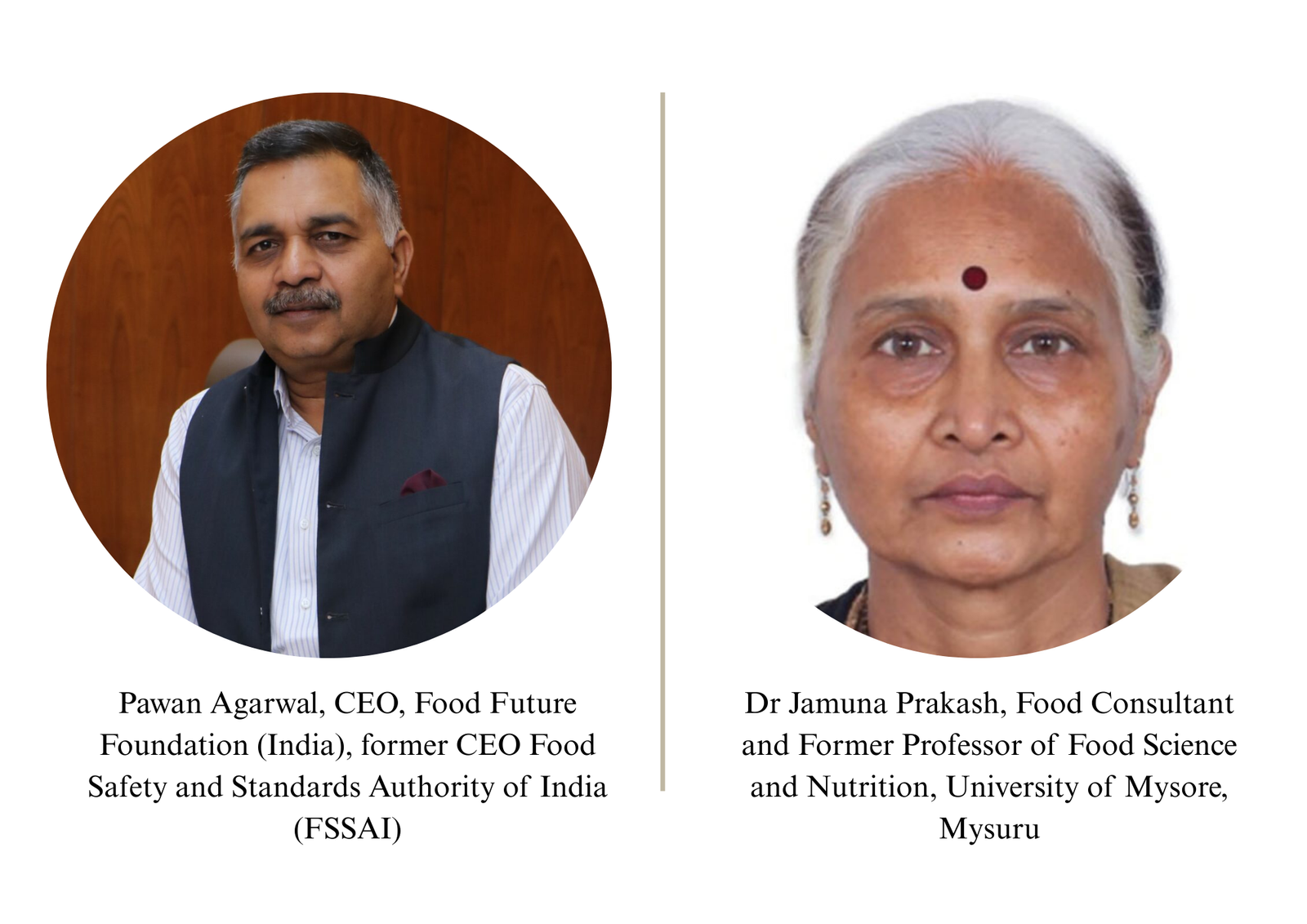
This article is informed by the authors’ participation in the 62nd International Glutamate Technical Committee (IGTC) Meeting held on November 24–25, 2025 in Ho Chi Minh City, Vietnam. IGTC is a long-standing scientific NGO recognised under the UN Codex system. For over 54 years, it has contributed to global dialogue on glutamate science, supported regulatory deliberations, and served as a platform for sharing regional scientific experience. As a science-focused organisation, it critically reviews evidence including studies with opposing views to ensure balanced, evidence-based discussion.