
Inside BENEO’s new pulse plant: pioneering sustainable protein from faba beans
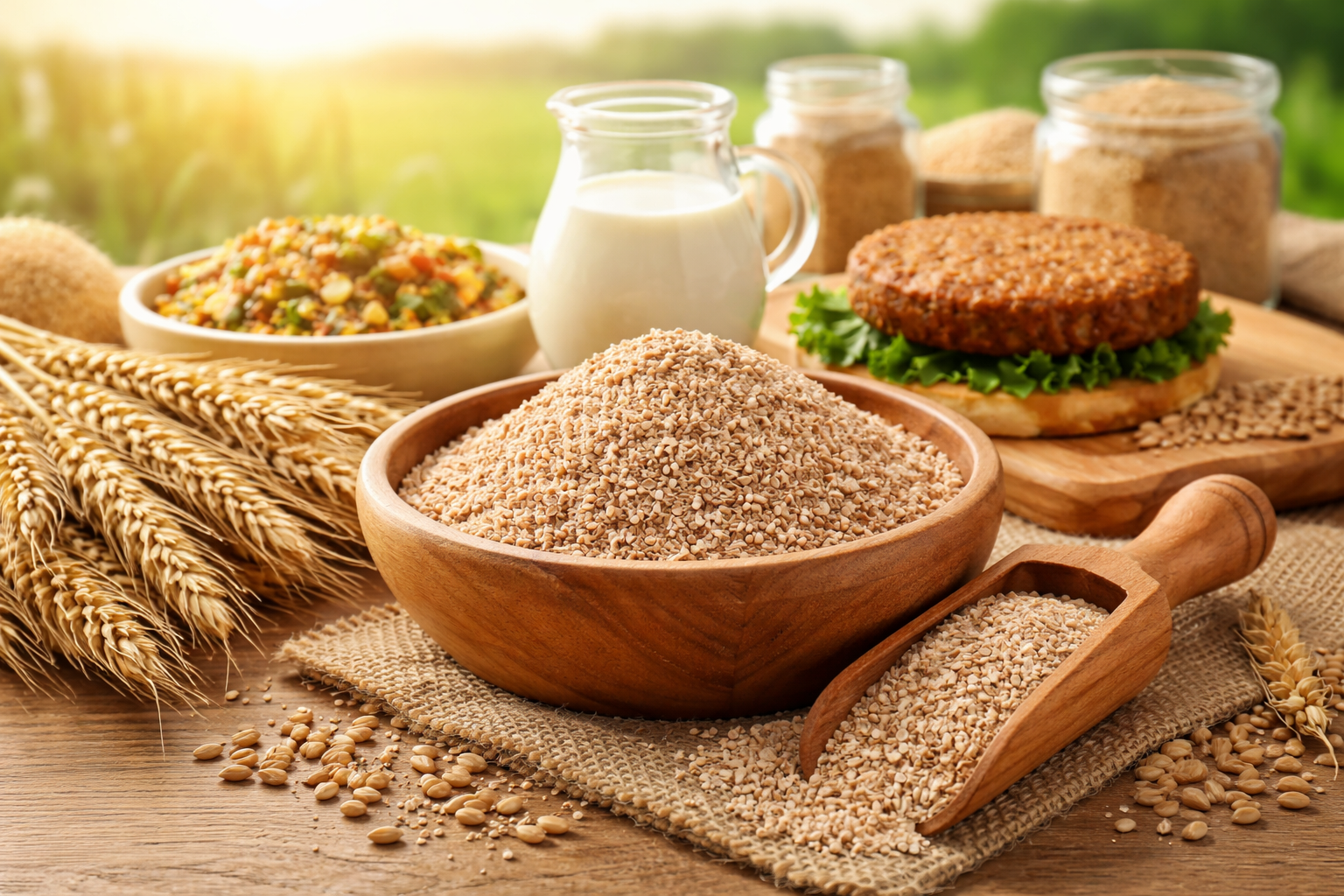
The next big plant-based innovation may not come from almonds, soy, or imported protein isolates. It may come from something far more familiar, something that has quietly been sitting in flour mills across India for decades.
Wheat bran.
For years, wheat bran has been treated as a low-value byproduct of flour milling. Once the flour is extracted, the bran is separated and largely diverted to animal feed or sold at minimal margins. Yet hidden inside this “waste stream” is a powerful combination of dietary fibre, protein, and bioactive compounds. Globally, wheat bran is already recognised as a rich source of fibre with proven health benefits, but its use in food has been limited due to poor texture and functionality.
What the food industry lacked was not the raw material, but the technology to transform it into something truly functional.
That may now be changing. A recent study highlighted by KTH Royal Institute of Technology shows that wheat bran can be converted into a fully plant-based food gel combining fibre and protein into a stable structure, opening up entirely new possibilities for food applications. This breakthrough demonstrates that wheat components can go beyond nutrition to deliver texture and stability—two of the biggest challenges in plant-based product development.
For India, the implications are enormous.
A Scientific Breakthrough with Industrial Implications
The new research focuses on extracting functional fibre from wheat bran and combining it with wheat protein to create a gel-like structure. In food science terms, this is a major shift. Traditionally, wheat bran has been difficult to incorporate into food products because of its coarse texture and poor mouthfeel. Even though it is nutritionally rich, it has always been technologically limiting.
What this innovation does is change the role of wheat bran from a passive ingredient to an active structuring agent.
Plant proteins alone often struggle to create stable, appealing textures. By forming a fibre-protein network, wheat bran helps stabilise these structures, improving consistency and mouthfeel. This opens doors across categories, from plant-based meat and dairy alternatives to functional beverages and high-fibre snacks.
Globally, this aligns with a larger shift towards multi-functional ingredients, those that can deliver both nutrition and performance. Wheat bran fits perfectly into this trend. It is abundant, plant-based, and already part of the existing food system.
For India, this could also address a long-standing cost challenge. Many plant-based innovations rely on imported or expensive protein ingredients. Wheat bran, by contrast, is locally available and produced in large quantities, making it a potentially cost-effective alternative for functional formulation.
India Already Has the Raw Material, and the Research Base
India’s wheat ecosystem generates significant quantities of bran every year, most of which remains underutilised. Yet Indian researchers have been working on unlocking its value for years.
Studies from Indian institutions have shown that wheat bran is not only rich in fibre but also contains usable protein and antioxidant compounds, making it suitable for functional food development.
More importantly, recent Indian research is actively exploring ways to enhance its functionality. For instance, work from institutions such as the University of Delhi and Jain University has demonstrated that fermentation and bioprocessing can significantly improve the antioxidant potential and bioavailability of wheat bran, making it more suitable for food applications.
Similarly, research from Indian food technology institutes has shown that fermentation can modify wheat bran’s structure, improving its bioactive profile and functional properties, including its interaction with other food components.
Beyond lab-scale studies, applied research in India has also explored upcycling wheat bran into ready-to-use functional ingredients, such as fibre-rich powders for food formulations.
However, most of these efforts have focused on fortification, adding wheat bran to biscuits, breads, or snacks to enhance nutritional value. While important, this approach only scratches the surface.
The global gel-based innovation points towards something bigger: not just adding wheat bran to foods, but redefining its role in product design.
From Opportunity to Reality: What the Industry Needs to Do Next
Despite its promise, wheat bran still faces a perception problem in India. For many, it remains associated with animal feed or with niche “health foods” that compromise on taste. Changing this perception will be as important as advancing the technology itself.
The industry now has an opportunity to reposition wheat bran as a modern, functional ingredient rather than a traditional byproduct.
The focus must shift towards application-driven innovation. Can wheat bran gels improve the texture of plant-based paneer or dahi alternatives? Can they enhance mouthfeel in high-protein beverages? Can they replace synthetic stabilisers in clean-label formulations? These are the questions that need to be explored at scale.
Equally important is collaboration. India already has strong academic research and a rapidly evolving food processing sector, but the gap between the two remains wide. Bridging this gap through pilot projects, joint research, and industry-led trials will be key to commercialising such innovations.
There is also a sustainability narrative that cannot be ignored. Globally and in India, there is increasing pressure to reduce food waste and maximise the value of agricultural byproducts. Wheat bran fits perfectly into this narrative. By converting it into a high-value ingredient, the industry can move closer to a circular food system, where nothing goes to waste.
A Quiet Ingredient with the Potential to Disrupt the Market
The Indian food industry is at a turning point. It is searching for solutions that are affordable, sustainable, and nutritionally meaningful, all at once.
Wheat bran offers exactly that.It is abundant, underutilised, and nutritionally rich. Now, with emerging global research demonstrating its ability to deliver functionality through innovative formats like plant-based gels, its potential has expanded dramatically.
For India, this is more than just an ingredient story. It is an opportunity to rethink how we value what we already produce. To move from byproduct to breakthrough. From waste to functionality. From nutrition to innovation.
Sometimes, the future of food is not about discovering something new. It is about finally recognising the value of what we have had all along.
Mansi Jamsudkar Padvekar