
Inside BENEO’s new pulse plant: pioneering sustainable protein from faba beans
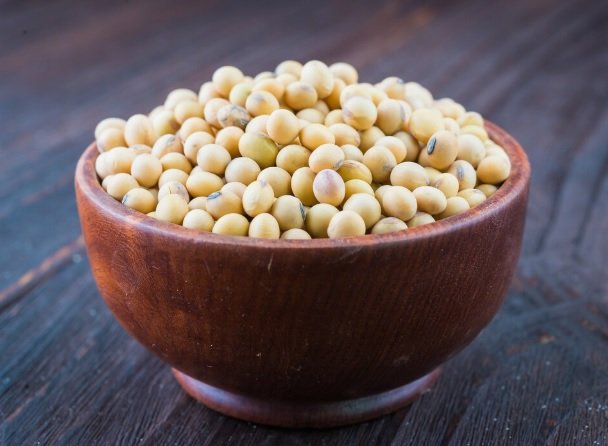
As more and more Indians are shifting to a vegetarian diet, the soya industry is scaling new heights. While some may be allergic to soya; a slew of health benefits for most, can be a better choice for patients with diabetes, heart disease, or obesity. Let’s explore the soya scenario in India and what the future holds for this alt protein.
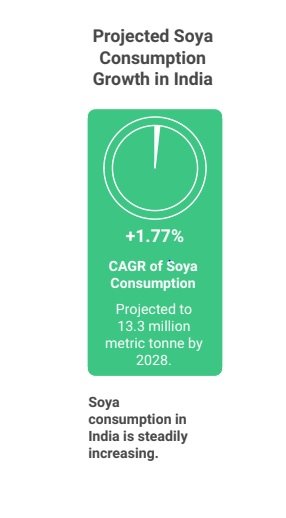
With many inclined to plant-based diets and turning vegan, the role of or soya is becoming more prominent in the food industry. According to Farmonaut, it offers precision agriculture solutions. Through satellite-based technology providing precision agriculture solutions, soya consumption in India is projected to grow to about 13.3 million metric tonne by 2028, with a CAGR of 1.77 per cent.
Madhya Pradesh was the major producer of soyabean, contributing more than 95 per cent to the national production, but recently Maharashtra is contributing more, despite Madhya Pradesh having a larger area under the crop. Extreme weather conditions in Madhya Pradesh brought it at par with Maharashtra in production .
According to Soyabean Processors Association of India (SOPA), which works closely with the government and farmers to increase soyabean productivity and promote soya-based products in the country, Government of India plans to increase soyabean productivity to 20 quintals per hectare and production to 20 million tonnes by 2030, as well as boosting soya product consumption by 50 per cent in five years for nutritional security of the population.
Not only for human consumption, meals are also used as animal feed.
Alt protein source
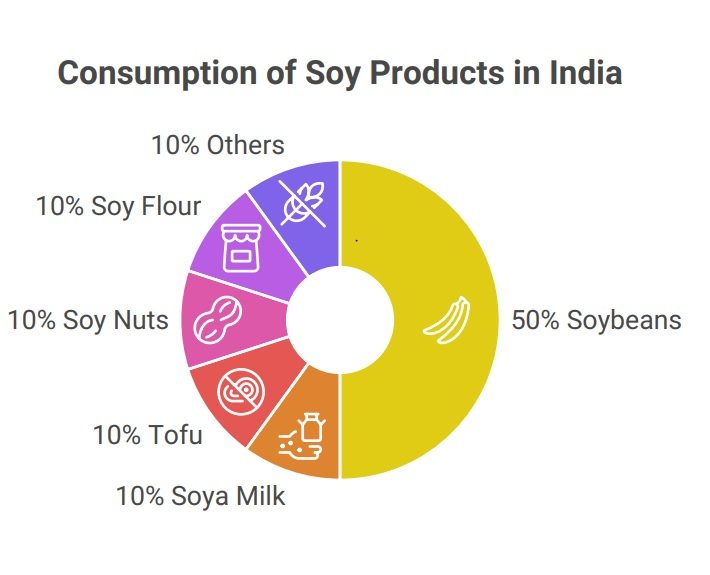
Products like soyabeans are largely consumed across India, followed by milk, Tofu (referred to as paneer), soya nuts, soya flour, soya nuggets, chunks etc. has essential amino acids, hence considered as an alternative to animal-based protein.
Soya is claimed to have complete protein that has all the amino acids that the body needs. The quality and digestibility of soya are very close to eggs, and its added advantage is that it has no cholesterol and very little fat. Many doctors claim that can be a better choice for patients with diabetes, heart disease, or obesity.
Swati Bhushan, Chief Clinical Nutritionist – Fortis Hiranandani Hospital, Vashi mentions that soya is rich in isoflavones like genistein and daidzein, which are types of phytoestrogens, plant-based compounds that have similar effects to the hormone estrogen in the body, but it is less potent. These isoflavones offer cardioprotective benefits (improving lipid profile), and reduce the risk of certain hormone-dependent cancers (like breast, ovarian, prostate).
A recent study found that school children who consumed more isoflavones exhibited better thinking abilities and attention.
Postmenopausal women have lower estrogen levels and are at risk of mood swings, depression, heart disease, diabetes and weight gain. Phytoestrogens present in it normalise the estrogen levels and help prevent such symptoms and risks. These also help increase calcium absorption and prevent osteoporosis. soya isoflavones help prevent damage to the liver by exhibiting their antioxidant properties. It has good amounts of manganese, which is important for bone health, brain function, blood sugar control, carbohydrate and fat metabolism. It is rich in Potassium, Calcium, Magnesium, Phosphorus, Zinc, Iron and Selenium. Vitamins like Vitamin B9 (Folate), Vitamin B6, and Vitamin K are also present and all these minerals and vitamins perform important functions in the body and are vital for good health.

Bhushan observes that soya is invaluable, particularly for vegetarians. It is a cost-effective protein, but the key is mindful preparation and varied consumption. Fermented soya products like tempeh and miso are good options as the fermentation process reduces anti-nutrients like phytates and improves bioavailability of isoflavones and gut health. Instead of sole reliance, it can be combined with other pulses and millets to fulfil all nutrient requirements.

Dr Prathima Kini, Lifestyle Medicine Physician and Pathologist, Co-Chairperson of the Physicians Association for Nutrition (PAN) India, Bengaluru City Chapter while comparing the nutrition benefits between eggs and mentions, “Soya is one of the richest plant proteins we have, with nearly 40 per cent of the bean being protein unlike eggs, it also comes with fibre, healthy fats, calcium, and iron. For someone recovering from surgery or illness, this combination is excellent. You are not just giving protein; you are also giving nutrients that help heal faster and keep the heart healthy.”

Agreeing to the above feedback, Dr Veena Acharya, Gynaecologist, Fetal Medicine Specialist, and Lifestyle Medicine Physician, Bengaluru opines, “In our daily practice, we see a lot of women struggling with anaemia and weak bones. Soya naturally provides iron and calcium, and helps prevent anaemia while also supporting bone strength. For women, especially those who cannot afford expensive supplements, this is a simple and safe nutrition option.”
Even the soya Food Promotion and Welfare Association (SFPWA), has been pressing its demand for adding soyaa-based food in the mid-day meal.

Edwina Raj, Head of Services – Clinical Nutrition & Dietetics, Aster CMI Hospital, Bangalore opines, “Many studies have shown that moderate consumption of soya can help reduce bad cholesterol levels and support overall health. However, like any food, it should be eaten in balanced amounts. Some people may have soya allergies or thyroid problems, and they should take medical advice before adding too much soya to their diet. Compared to animal protein, soya is also more sustainable. Producing soya uses fewer natural resources and causes less harm to the environment. It is a good choice for those who care about animal welfare and the planet.

Rutu Dhodapkar, Deputy Manager, and Head of Clinical Dietetics, PD Hinduja Hospital & MRC, Khar, Mumbai mentions, “Cold pressed oil can be considered as it has antioxidants. Those allergic to it should avoid its products. It is good to rotate oils so mustard, rice bran oil / groundnut oil can give good balance. Soyaa in its best form can be Tofu, Tempeh as it has probiotics and higher digestibility, better for mineral absorption. It gives 19 gm per 100g .As it is fermented it becomes gut friendly.”

Dr Hana Kahleova, Director, Clinical Research, Physicians Committee for Responsible Medicine (PCRM) agrees, “Like most other plant foods, the healthiest soy foods are the least processed. Young soyabeans, also called edamame, can be steamed and eaten right from their pods. soyabeans are also used to make other foods such as soya milk, tofu, tempeh, and miso, as well as soya meats and cheeses. It used to be thought that soyaa’s natural isoflavones affect hormones. New research based on human data shows that typical amounts of soya foods do not disrupt hormone balance in men or women – in fact, soya has been linked to lower risk of hormone-related cancers.”
Health concerns
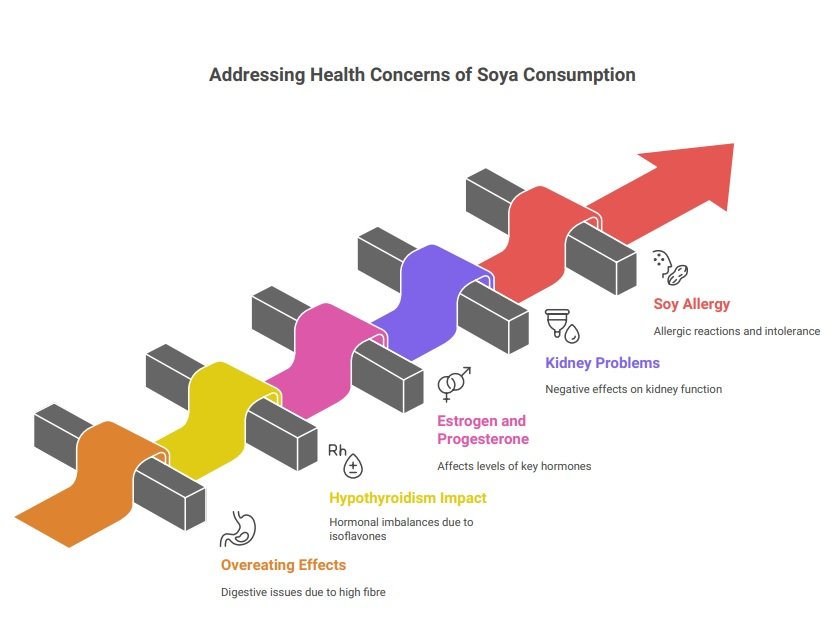
Despite a host of healthy benefits and being easily available in the market at an affordable price, hidden health issues have been reported. Overeating can lead to digestive issues due to the soya’s high fibre content and compounds like oligosaccharides. Individuals with hypothyroidism can have hormonal imbalances due to soy isoflavones. Apart from hormonal issues, such as health issues, where the levels of estrogen and progesterone have been reported. Reports of the kidney being affected have also been reported. Soya allergy and soya intolerance can be some of the major health issues.
People with soya allergies can avoid soya oil or use refined versions that remove allergens. Some processed soya oils may contain trans fats if they are hydrogenated, which are harmful to heart health. Therefore, choosing cold-pressed or non-hydrogenated soya oil is a better option.

Neha Pandey, Scientist, Food Technology, Co-PI, ABI, Incharge, soya Processing and Product Development Unit, Indian Institute of soyabean Research, Khandwa Road, Indore, says, “The direct use of soyabean for food in India has faced some challenges due to the presence of a characteristic ‘beany flavour’ (caused by lipoxygenases-Lox1, Lox2, and Lox3) and anti-nutritional factors like trypsin inhibitors (especially, Kunitz trypsin inhibitor (KTI)). This has limited its full integration into the human food chain, and while researchers are working on breeding new varieties to address these issues, a large portion of the crop is still processed into oil and meal for other applications. As for soya oil, it is one of the most commonly used and important edible oils in India, used for cooking and industrial purposes. In fact, 100 per cent of the domestically produced soyabean oil is consumed within the country.
Research also indicates that people who regularly consume soya or other phytate-rich foods may adapt over time, improving the absorption of iron from these foods. In addition, calcium absorption from calcium-set tofu or fortified soya milk is comparable to that from cow’s milk.

Christelle Cordahi, Head of Sustainability and Human Utilization – MENA and South Asia (MENASA), US soyabean Export Council (USSEC), says, “In the case of soya allergy, the reaction is triggered by specific proteins naturally found in soyabeans. While soya contains many proteins, only a few are responsible for most allergic reactions. Overall, soya allergy has one of the lowest prevalence rates among major food allergens. It tends to occur more often in children, but based on clinical observations, around 70 per cent outgrow it by about age ten. Although in most cases, soya allergy is mild and not life-threatening, individuals with a confirmed soya allergy should avoid all soya products that contain protein. However, they can safely consume highly refined soyabean oil, as it contains negligible amounts of soya protein and does not trigger allergic reactions.”
Inevitable growth
Government support, awareness, more R&D, and a rising product demand will help the soya industry grow. As awareness on the health benefits of is gaining entry into the population at large, the growth is inevitable.
However, challenges like infrastructure gaps, low productivity, quality control, and environmental impact need to be looked into for the soya industry to flourish. Better policies by the government and the role of FSSAI to keep a track on the quality of the products are noteworthy.
Sanjiv Das
sanjiv.das@mmactiv.com