
Inside BENEO’s new pulse plant: pioneering sustainable protein from faba beans
The system will address challenges related to biometric authentication and e-POS operational issues while ensuring secure, traceable and real-time transactions
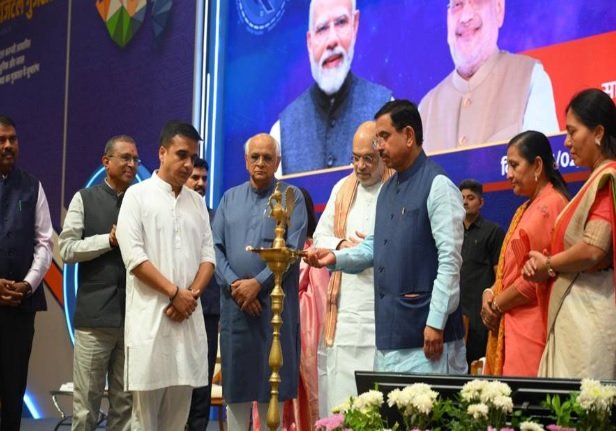
The Government of India has launched a Central Bank Digital Currency (CBDC)-based Digital Food Currency pilot in Gujarat. It was inaugurated by the Union Home Minister, Amit Shah in the presence of Union Minister for Consumer Affairs, Food and Public Distribution, Pralhad Joshi and Chief Minister of Gujarat, Bhupendra Patel ; Minister of State for Consumer Affairs, Food and Public Distribution, Nimuben Jayantibhai Bambhaniya.
Joshi, said that the introduction of Central Bank Digital Currency (CBDC) in the Public Distribution System (PDS) marks a significant milestone towards ensuring transparency, efficiency and beneficiary empowerment in India’s food security architecture. Launching the CBDC-based Digital Food Currency pilot in Gujarat, he emphasised that India’s PDS—the largest food distribution system in the world serving more than 80 crore beneficiaries—continues to evolve through technology-driven reforms. Giving the slogan ‘Har Dana, Har Rupiya, Har Adhikar,’ the minister said the initiative will enhance awareness of entitlements, simplify access, and strengthen accountability in delivery of subsidised foodgrains.
Joshi informed that under the CBDC framework, digital coupons generated through the Reserve Bank of India will be credited directly to beneficiaries as programmable digital currency (e₹). Beneficiaries can redeem their entitled quantity of foodgrains at Fair Price Shops (FPS) using CBDC coupon or voucher codes. The system will address challenges related to biometric authentication and e-POS operational issues while ensuring secure, traceable and real-time transactions. He further noted that the pilot will soon be expanded to the Union Territories of Chandigarh, Puducherry and Dadra & Nagar Haveli and Daman & Diu.
The initiative has been launched by the Government of India in collaboration with the Reserve Bank of India and the Government of Gujarat under the Public Distribution System in Ahmedabad, Anand, Valsad and Surat districts. As part of its scale-up strategy, subsequent phases will extend to the Union Territories of Puducherry, Chandigarh, and Dadra & Nagar Haveli and Daman & Diu.
Amit Shah said that the CBDC pilot represents an important extension of the Digital India vision into the Public Distribution System. He appreciated the efforts of all stakeholders in making the system more transparent, corruption-free and leak-proof, noting that nearly half of the world’s digital transactions now take place in India. He added that CBDC would further strengthen the Government’s vision of Minimum Government, Maximum Governance, ensuring beneficiaries receive their entitled food grains with greater transparency and awareness of rights. He also encouraged other States and Union Territories to adopt CBDC in PDS implementation.
Under the CBDC-enabled system, beneficiaries’ digital wallets will carry programmable Digital Rupee, enabling seamless QR code-based or coupon code-based transactions at Fair Price Shops for purchase of entitled foodgrains. The system eliminates repeated biometric authentication, improves transaction efficiency, and generates a real-time digital trail, thereby enhancing transparency, monitoring and accountability. Fair Price Shop dealers will also receive their margins on a real-time basis, creating a mutually beneficial ecosystem.
Over the past several years, the Department of Food and Public Distribution has undertaken extensive digital transformation of India’s food security ecosystem. Key initiatives include end-to-end digitisation of ration cards and nationwide portability under the One Nation One Ration Card (ONORC) framework, deployment of e-POS devices for Aadhaar-enabled authentication and real-time transaction capture, and implementation of data-driven validation through the Rightful Targeting Dashboard. Digital supply-chain optimisation through Ann Chakra and strengthened grievance redressal mechanisms such as Ann Sahayata have further enhanced transparency, efficiency and citizen-centric service delivery. The CBDC-based Digital Food Currency pilot represents the next stage of this reform journey by integrating a programmable sovereign digital payment layer into the PDS architecture.
The pilot, which began with a limited number of beneficiaries, is expected to mark a transformative step towards integrating technology with welfare delivery, strengthening transparency and building a more efficient and accountable governance framework for last-mile service delivery.